✨Introduction
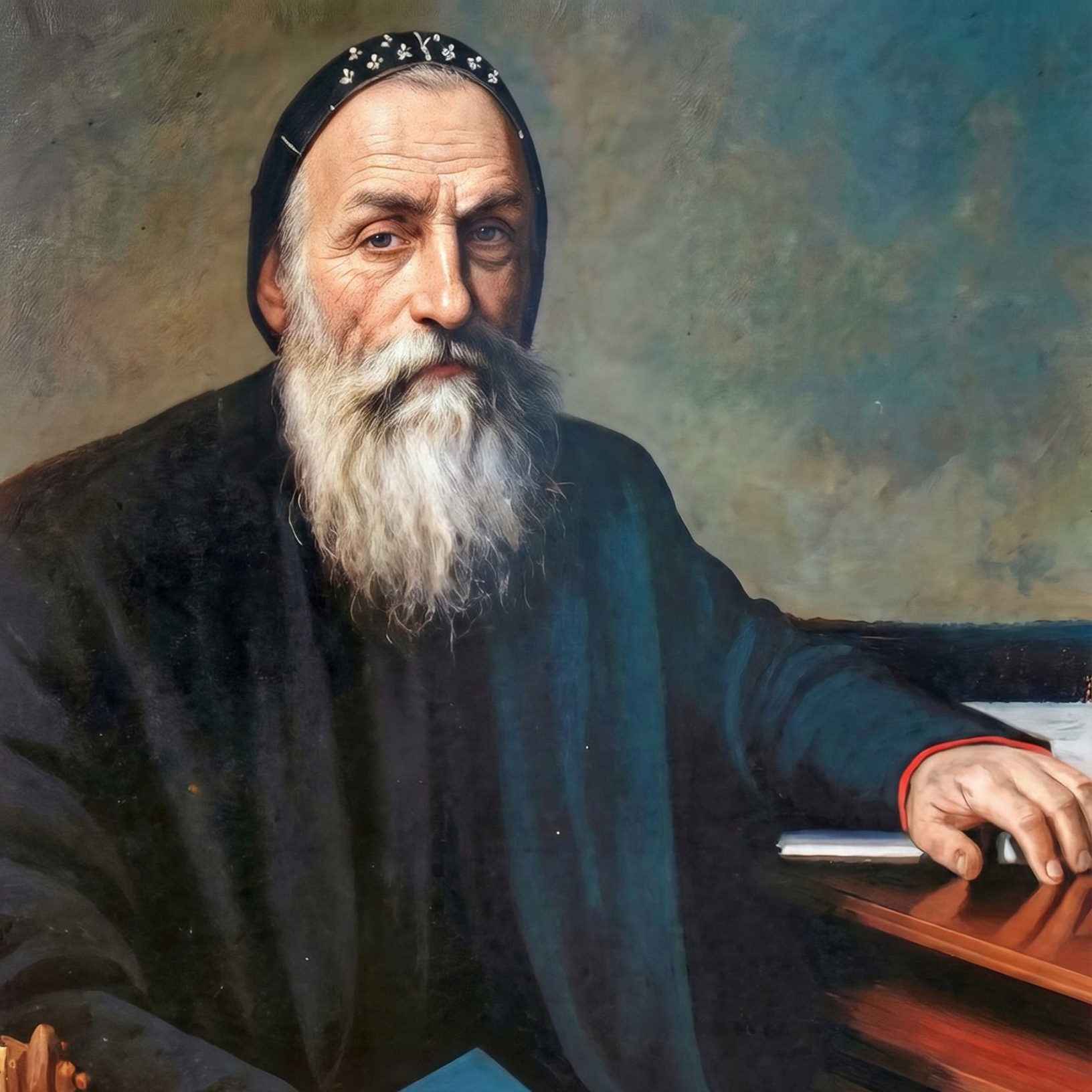
Among the great bishop-saints who shaped the identity of the Syriac Orthodox Church in its most
formative centuries, Mor Gabriel of Tur Abdin — known in scholarly sources as Gabriel of Beth
Qustan or Gabriel of Qartmin — stands as one of the most luminous and historically documented.
Born in the village of Beth Qustan around 573–574 AD, he spent his entire life within the
monastic walls of Qartmin Abbey, rising from novice monk to Bishop of Tur Abdin, and dying in
full sanctity on 23 December 648 AD.
His life bridges two worlds: the late antique Christian Roman world and the newly dawning age of
Islam. He shepherded his flock through the cataclysmic transition of the Arab conquest of
Mesopotamia, negotiating peace and protecting the rights of Syriac Orthodox Christians in Tur
Abdin. His miracles, recorded in the ancient Syriac hagiography known as the Life of
Gabriel (part of the Qartmin Trilogy), are among the most vividly documented
in all of Syriac hagiographical literature.
His holiness so profoundly marked the Monastery of Qartmin that by the end of the fifteenth
century, the monastery itself — founded in 397 AD — was renamed in his honour and has ever
since been known as the Monastery of Saint Gabriel, or Dayro d-Mor Gabriel
(ܕܝܪܐ ܕܡܪܝ ܓܒܪܐܝܠ), the oldest continuously functioning Syriac Orthodox monastery in the world.
Note on Names: The saint venerated on 23 December as Mor Gabriel of Tur
Abdin is Gabriel of Beth Qustan (born c. 573, died 648 AD) — the seventh-century
bishop whose relics rest in the monastery. He is distinct from the earlier monastic founders
Mor Shmuel and Mor Shemʿun who established Qartmin Abbey in 397 AD. The monastery was
renamed after Gabriel because of his extraordinary holiness and the miracles wrought through
his relics after his death.
🌅Early Life and Entry into Monastic Life
Birth at Beth Qustan
Mor Gabriel was born around 573–574 AD in the village of Beth Qustan, a settlement in the
Tur Abdin plateau of what is today southeastern Turkey, near the city of Mardin. Tur Abdin
— the "Mountain of the Servants of God" (ܛܘܪ ܥܒܕܝܢ) — was already by this period
one of the greatest heartlands of Syriac Christian monasticism, its limestone hills dotted
with cave-hermitages, village churches, and flourishing monastic communities.
The village of Beth Qustan lay within easy reach of Qartmin Abbey, the most powerful
monastery of the region, founded nearly two centuries earlier by the ascetics Mor Samuel
and Mor Shimon. It was to this ancient monastery that the young Gabriel would be drawn, as
if by divine attraction, at the very threshold of adolescence.
Entering the Monastery of Qartmin
Around 588–589 AD, while still in his mid-teens, Gabriel entered the Monastery of Qartmin
as a monk. The monastery was then a great centre of Syriac Orthodox monastic life, its
community having numbered at its height over a thousand monks, and its reputation drawing
scholars and ascetics from across Mesopotamia and beyond. Gabriel would never leave its
walls as a place of permanent belonging; the monastery became his entire world, and he
became in time its greatest glory.
His monastic formation within Qartmin shaped him in the traditions of West Syriac asceticism:
the canonical hours of the Shehimo, the Psalter memorized in Syriac, the daily
rhythm of labor, silence, and liturgical prayer. The monastery had already produced saints
and scholars; Gabriel absorbed this heritage with both intellectual depth and spiritual hunger.
📜Ascent Through Holy Orders
Ordination as Deacon
Around 593–594 AD, Gabriel was ordained a deacon — a formal recognition of his spiritual
maturity and the esteem in which his superiors held him. He was by then approximately twenty
years old, and his reputation for holiness, deep prayer, and austere living was already
well-established within the monastic community.
Election as Head of the Brotherhood
Circa 612–613 AD, Gabriel was elected head of the brothers at the monastery — a position of
significant pastoral and administrative responsibility within the Qartmin community. This
election by his fellow monks speaks to the universal respect in which he was held: not merely
as an ascetic, but as a guide and father to others. He was at this point approximately
thirty-eight to thirty-nine years of age, a seasoned monk of more than two decades.
Ordination as Priest
Around 618–619 AD, Gabriel was ordained to the holy priesthood. The priesthood in the Syriac
Orthodox tradition is not merely an administrative office but the vocation of the liturgical
mediator — the one who stands at the altar of the Qurbono on behalf of the whole
community. Gabriel's ordination to the priesthood elevated his monastic life into a fully
sacerdotal ministry.
Consecration as Abbot and Archbishop
The pivotal moment in Gabriel's ecclesiastical career came on 1 May 634 AD,
when he was simultaneously consecrated as Abbot of the Monastery of Qartmin and as
Archbishop of Dara — succeeding the venerable Daniel Uzoyo who had held both roles. This
dual appointment was highly significant: it joined the monastic headship of the most
important abbey in Tur Abdin with the episcopal oversight of a major Syriac Orthodox see.
Gabriel was now approximately sixty years of age — a seasoned abbot, a deeply experienced
monk, and a bishop of the Syriac Orthodox Church. The great trials of his episcopate lay
immediately ahead.
🏛️The Arab Conquest and the Defence of His
Flock
The Muslim Conquest of Mesopotamia (639 AD)
The Arab conquest of Mesopotamia, completed by 639 AD, transformed the political landscape of
the entire region with breathtaking speed. The ancient Sasanian Persian empire — under which
the Syriac Orthodox community had long endured complex relations — collapsed, and Arab Muslim
forces under the Caliphate of Umar ibn al-Khattab swept through Mesopotamia and the northern
Syrian-Mesopotamian plateau.
For the Syriac Orthodox Christians of Tur Abdin, this was a moment of profound uncertainty.
Their bishop, Mor Gabriel — then overseeing two dioceses — rose to the occasion with
extraordinary pastoral and diplomatic skill. According to the historical evidence preserved
by the scholar Andrew Palmer in his critical edition of the ancient Syriac sources, Gabriel
likely negotiated the rights and obligations of the Syriac Orthodox Church in Tur Abdin
directly with the Muslim conquerors, and may even have met personally with the Caliph Umar.
Protector of the Community Under New Rule
The peace treaty that Gabriel negotiated was of lasting importance. It protected the rights
of Christians in Tur Abdin — their freedom of worship, the inviolability of their monasteries
and churches, and their communal integrity under the new Islamic political order. This
diplomatic achievement, secured by a bishop in his mid-sixties, stands as one of the most
significant pastoral acts of Mor Gabriel's episcopate.
After 644 AD, Gabriel's authority was further consolidated: he became Bishop of Tur Abdin
with authority equal to that of an archbishop — the supreme ecclesiastical shepherd of the
entire Syriac Orthodox community across the plateau. This was a recognition of his seniority,
his holiness, and the irreplaceable nature of his leadership during a time of political
transformation.
Mor Gabriel's episcopal authority spanned two great historical eras: the last decade of
late Roman / Byzantine-Persian rivalry, and the first decade of Islamic rule over Mesopotamia.
His ability to navigate both worlds — maintaining the dignity of his flock and the integrity of
the Church's worship — reflects the extraordinary pastoral wisdom the Syriac tradition
attributes to him.
✨Miracles of Mor Gabriel
The ancient Life of Gabriel — composed in Syriac and preserved as part of the
Qartmin Trilogy (edited and translated into English for the first time by Andrew
Palmer in his 1990 Cambridge University Press study Monk and Mason on the Tigris
Frontier) — records a series of remarkable miracles attributed to the bishop.
These miracles are not legendary accretions of a later age; they are embedded within a
detailed, historically grounded hagiography that names specific villages, individuals,
and circumstances with the precision of a contemporary witness.
The Three Resurrections from the Dead
The most dramatic miracles attributed to Mor Gabriel are three separate resurrections of
the dead — a number that the tradition of the Church associates with the greatest of
saints and with the prophetic power of Elijah and Elisha. These three were:
- The resurrection of the son of a widow in the village of Sighun.
- The resurrection of a boy from the village of Olin.
- The resurrection of his friend, the abbot of the Monastery of the Cross
near Hah.
Each of these miracles is recorded in the Syriac hagiography with circumstantial detail that
speaks to the historical reliability of the tradition. The three resurrections became the
foundation of Gabriel's reputation as a thaumaturge — a miracle-worker of the highest order.
The Stone Moved by the Dead
Another miracle recorded in his hagiography took place when Gabriel, at approximately
seventy years of age, sent men to transport a large stone from Beth Debe
(near Nisibis) to the Monastery of Qartmin for use in its construction. The men proved
unable to move the stone due to its enormous size. Gabriel then commanded the entire
monastery community to assist — and, according to the tradition, the dead rose from their
graves to help transport the stone. The stone was brought to the Dome of Theodora
at the monastery, and Gabriel prostrated himself before the risen dead, begging their
forgiveness for having disturbed their rest.
This miracle — startling in its imagery — belongs to the ancient Syriac hagiographical
tradition that understands the saints as those in whom the boundary between the living
and the departed has become translucent through holiness.
Posthumous Miracle: The Plague of 774 AD
The miraculous power of Mor Gabriel did not cease with his death. Over a century after
his repose, in 774 AD, a devastating plague struck the Monastery of Qartmin, killing
ninety-four monks. In their desperate intercession, the surviving monks exhumed the
remains of Mor Gabriel and placed his body upright within the church, as a living
intercessor before God. His right hand was removed and carried to the nearby town of
Hah to end the plague there — and the outbreak ceased.
Gabriel's body was reburied in a bronze coffin, and his severed right hand — preserved
as a holy relic — has continued to be venerated by the faithful. It was from this
miraculous intervention that the monastery began formally to bear his name: the
community that had been known as Dayro d-Qartmin began henceforth to be called the
Monastery of Saint Gabriel.
🕊️The Blessed Repose of Mor Gabriel
Death on 23 December 648 AD
Mor Gabriel reposed in the Lord on 23 December 648 AD, having served
as bishop for fourteen years and as a monk of Qartmin for approximately six decades.
He died within the walls of the monastery he had led and loved — surrounded by the
prayers that had been the breath of his entire life.
An Extraordinary Funeral
The magnitude of Mor Gabriel's spiritual authority is nowhere more clearly expressed
than in the witness of those who came to bury him. His funeral was attended by
2,700 priests and altar servers — a staggering gathering that speaks
to the breadth of his influence across the entire region. Among the bishops present
were:
- Iwannis of Amida (modern Diyarbakır)
- Ignatius of Mayperqat
- Gregory of Arzon (Arzanene)
- Basil of Jazira
- Polycarp of Beth Araboye
- Dioscorus of Singara and Haburo
- Epiphanius of Nisibis
- Sisinnius of Dara
- John of Kfar Tutho
- Jacob of Sawro
This episcopal gathering — ten bishops from across the Syriac Orthodox world —
represents an extraordinary act of veneration. The ancient sources preserve these
names with remarkable precision, and Andrew Palmer's critical edition of the Syriac
text confirms their historical reliability.
A Miracle Even at the Funeral
Even at the moment of his burial, Mor Gabriel's sanctity manifested. A ten-year-old boy
died during the funeral proceedings — and was restored to life soon after. This child,
raised up by the intercession of the newly departed bishop, was later identified by the
tradition with Simeon of the Olives, who himself became one of the
great saints and benefactors of the Syriac Orthodox Church in the following century.
⛪His Relic and the Monastery That Bears His Name
The Holy Relic of the Right Hand
The right hand of Mor Gabriel, separated from his body during the plague miracle of 774 AD
and carried to Hah as a healing relic, became one of the most venerated sacred objects
of the Syriac Orthodox tradition. It was — and continues to be — venerated by the faithful
as an instrument of divine blessing and healing intercession. Annual celebrations at the
Monastery of Mor Gabriel, particularly during his feast on 23 December and during the
August feast of the monastery, draw thousands of Syriac Orthodox faithful from Tur Abdin
and the diaspora communities of Europe to venerate his memory and his holy remains.
The Monastery That Took His Name
The Monastery of Qartmin — founded in 397 AD by Mor Samuel and Mor Shimon — bore that
original name for centuries. But such was the power of Gabriel's sanctity, expressed
above all in the plague miracle of 774 AD and in the unceasing stream of miracles
reported at his tomb, that the community and the wider faithful gradually came to know
the monastery by a new name: Dayro d-Mor Gabriel — the Monastery of Saint
Gabriel. By the end of the fifteenth century, this name had become definitive.
Today, the monastery stands as one of the oldest continuously active Christian
monasteries in the world — predating the Monastery of Saint Catherine in Sinai by
half a century, and older than the monasteries of Mount Athos by four centuries.
It has been home throughout its history to four Syriac Orthodox patriarchs, one
Maphrian, and eighty-four bishops. Its current abbot is Mor Timotheos Samuel Aktaş,
Metropolitan of Tur Abdin.
The Qartmin Trilogy: The Primary Source
The primary hagiographical source for the life of Mor Gabriel is the ancient Syriac
text known as the Life of Gabriel of Beth Qustan, one of the three texts that
make up the Qartmin Trilogy — together with the Life of Samuel of Eshtin
and the Life of Simeon of Qartmin. This trilogy preserves the foundational
history of the monastery and its greatest saints. It was first critically edited and
translated into English by Andrew Palmer (Cambridge University Press, 1990) and is
available on the Internet Archive through Palmer's own permission.
📖Theological and Spiritual Significance
A Miaphysite Bishop of the Apostolic Tradition
Mor Gabriel lived and died as a faithful son of the Syriac Orthodox Church — the
Miaphysite tradition that had rejected the Council of Chalcedon (451 AD) and maintained
the Christology of Saint Cyril of Alexandria: one nature, one person, one will in Christ.
The monastery he led had itself been a bastion of Miaphysite orthodoxy since the fifth
century, forfeiting imperial patronage under the Chalcedonian Emperor Marcian rather than
compromise the apostolic faith. Gabriel was the inheritor and guardian of this unbroken
tradition.
The Monastic-Episcopal Ideal
In Mor Gabriel, the Syriac Orthodox tradition sees the perfect integration of the two
great vocations of its ecclesial life: the ihidaya (the solitary, the
monastic) and the bishop. He did not abandon the monastery for the episcopate; he
brought the episcopate into the monastery, governing his flock with the humility of a
monk and the authority of a successor to the apostles. This model — the monk-bishop —
is deeply rooted in the Syriac spiritual tradition and finds in Gabriel one of its most
complete embodiments.
Patron and Intercessor of Tur Abdin
To the faithful of Tur Abdin — the indigenous Syriac Christian community who have
clung to their faith through centuries of persecution, genocide, and displacement —
Mor Gabriel is far more than a historical bishop. He is their heavenly patron, their
protector, their father. His feast on 23 December is celebrated with the full weight
of communal memory: hymns in the ancient Syriac tongue, the holy Qurbono
offered at the altar above his relics, and the gathering of a community that has
survived everything the world could throw at it — because he prays for them before
the throne of the Most High.
📚Primary Sources and Published Scholarship
Unlike many saints of the ancient world known only through late legendary accretions,
Mor Gabriel is documented in historically grounded primary sources. Scholars and the
faithful alike can consult the following foundational works:
1. The Qartmin Trilogy (Syriac, 7th–9th century)
The Life of Gabriel of Beth Qustan, preserved within the Qartmin Trilogy,
is the primary ancient Syriac hagiography of the saint. Composed in Syriac close to the
events it describes, it records his life, miracles, death, and the veneration of his
relics with remarkable historical detail. The trilogy was first critically edited and
translated into English by Andrew Palmer in the microfiche supplement to
his monograph Monk and Mason on the Tigris Frontier: The Early History of Tur
ʿAbdin (Cambridge University Press, 1990; University of Cambridge Oriental
Publications, No. 39). Palmer received the copyright back from CUP and made the full
text freely available on the Internet Archive.
2. Monk and Mason on the Tigris Frontier — Andrew Palmer (1990)
This is the definitive scholarly monograph on the early history of the Monastery of
Qartmin and its saints. Palmer examines the architectural monuments of Tur Abdin
alongside the hagiographical, historical, liturgical, and epigraphical sources to
produce a comprehensive history of the monastery and the region. The book is described
by Sidney H. Griffith in the Middle East Journal as "an almost indispensable
reference source for anyone seriously interested in the history and archaeology of the
early Christian areas of Southeastern Turkey." (Cambridge University Press, 1990;
ISBN: 978-0-521-36026-5)
3. History of the Monastery of Mor Gabriel — Philoxenos Yuhanon Dolabani (2011)
Written by Mor Philoxenos Yuhanon Dolabani (1885–1969), Bishop of Mardin and one of the
greatest Syriac scholars of the twentieth century, this is the institutional history of
the monastery from within the Syriac Orthodox tradition. It was published in bilingual
Syriac-English edition by Gorgias Press (2011; Bar Ebroyo Kloster Publications, Vol. 26;
ISBN: 978-1-61143-220-6). Dolabani himself composed many of the scholarly works that
preserved Syriac Orthodox ecclesiastical history through the twentieth century.
4. The History of Tur Abdin — Ignatius Aphrem I Barsoum (2008)
Written by Patriarch Ignatius Aphrem I Barsoum — one of the greatest scholar-patriarchs
in the modern history of the Syriac Orthodox Church — and translated into English by
Matti Moosa, this work provides the broader regional history of Tur Abdin within which
the life and legacy of Mor Gabriel must be understood. Published by Gorgias Press (2008)
in the Publications of the Archdiocese of the Syriac Orthodox Church in the Eastern
United States series.
5. Tracts on the Mountain of the Servants — Dale A. Johnson (2008)
Johnson's work provides accessible accounts of the saints of Tur Abdin, including Mor
Gabriel, drawing on the primary Syriac sources. (Lulu.com, 2008;
ISBN: 978-1-4357-3991-8). This volume is cited in the scholarly literature on Gabriel
of Beth Qustan for its accounts of his miracles.
6. The Scattered Pearls — Ignatius Aphrem I Barsoum (2003, Gorgias Press)
The authoritative history of Syriac literature and sciences, compiled by Patriarch
Barsoum and translated into English. Mor Gabriel appears in this comprehensive survey
of Syriac Orthodox ecclesiastical personalities. (Gorgias Press, 2nd revised edition,
2003; ISBN: 978-1-4632-0128-9)
📅Life of Mor Gabriel: A Chronology
c. 573–574 AD — Born in the village of Beth Qustan, Tur Abdin.
c. 588–589 AD — Enters the Monastery of Qartmin as a monk (aged ~15).
c. 593–594 AD — Ordained as deacon (aged ~20).
c. 612–613 AD — Elected head of the monastic brotherhood (aged ~39).
c. 618–619 AD — Ordained as priest (aged ~45).
1 May 634 AD — Consecrated Abbot of Qartmin and Archbishop of Dara,
succeeding Daniel Uzoyo (aged ~60).
c. 639 AD — Negotiates with Arab conquerors to protect the rights of
Syriac Orthodox Christians in Tur Abdin; possibly meets Caliph Umar.
After 644 AD — Elevated to Bishop of Tur Abdin with full archiepiscopal
authority.
23 December 648 AD — Reposes in the Lord at Qartmin Monastery (aged ~75).
Funeral attended by 2,700 priests and 10 bishops.
774 AD — A plague kills 94 monks at Qartmin. Gabriel's body is exhumed;
his right hand is carried to Hah; the plague ceases. The monastery begins to be
called by his name.
By 15th century — The monastery is definitively known as
Dayro d-Mor Gabriel — the Monastery of Saint Gabriel.
23 December — His feast day, celebrated annually throughout the Syriac
Orthodox Church.
Prayer to Mor Gabriel of Tur Abdin
O holy Mor Gabriel, bishop and wonder-worker of Tur Abdin, who from your youth gave
yourself entirely to the service of God within the sacred walls of Qartmin, and who in
your old age shielded your flock from the tempests of conquest and pestilence alike —
intercede for us before the throne of the Holy Trinity. You who raised the dead and
ended plagues, whose holy right hand still blesses the faithful across the centuries,
pray for the Syriac Orthodox Church of Antioch, for the suffering people of Tur Abdin,
and for all who invoke your holy name. Strengthen those who are persecuted for their
faith. Protect the monasteries and churches of our holy tradition. And lead us, by your
prayers and example, to that same joy in which you now stand before our Lord Jesus
Christ — the one nature, one person, one will — with the Father and the Holy Spirit,
unto ages of ages. Amen.
ܡܳܪܝ ܓܰܒܪܺܐܝܶܠ ܨܰܠܳܐ ܥܠܰܝܢ ܀
Mor Gabriel, pray for us.