📖A Patriarch's Ultimate Sacrifice
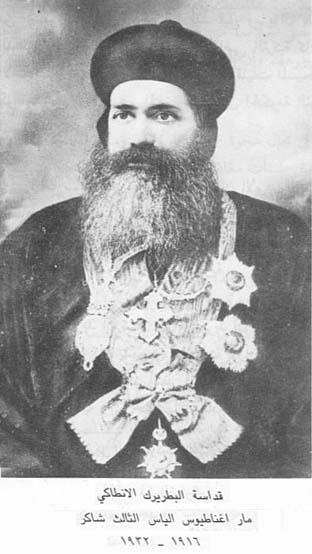
Patriarch Mor Ignatios Elias III Shakir holds a unique and cherished place in the heart of
every Malankara Orthodox Christian—he is the Good Shepherd who gave his life for his flock, the
Patriarch who came to India to heal the wounds of schism and died in the attempt, the only Patriarch
of Antioch whose holy remains rest in Indian soil, a perpetual reminder of the sacrificial love that
binds the Syriac Orthodox Church to its faithful children in Malankara.
His Holiness Mor Ignatios Elias III was the 119th legitimate successor to St. Peter on the Holy
Patriarchal See of Antioch, standing in an unbroken apostolic succession stretching back to the
first century. He led the Syriac Orthodox Church during one of the most difficult periods in its
history—the aftermath of the Sayfo genocide (1915), the collapse of the Ottoman Empire, the
dispersion of Syriac Christians from their ancestral lands, and internal ecclesiastical challenges
including the schism in Malankara.
What makes Patriarch Elias III particularly beloved in Malankara is not merely his patriarchal
office or his theological learning or his administrative abilities—though he possessed all these—but
his pastoral heart, his willingness to sacrifice everything for the unity and wellbeing of the
Church, and his prophetic final journey to India. When invited by the British Viceroy to mediate the
divisions that had torn the Malankara Church, this elderly patriarch, already suffering from heart
disease, undertook the arduous journey from Mesopotamia to India, declaring to his concerned sister:
"Death is inevitable whether here or in India; I would rather sacrifice my life for the sake of our
children in Malankara."
These words—"our children in Malankara"—capture the paternal love that characterized his
relationship with the Indian Church. He saw the Malankara faithful not as distant subjects but as
beloved children, not as a peripheral mission but as an integral part of the Syriac Orthodox family.
And he proved his love not merely with words but with his life, dying on Indian soil while working
for the Church's unity and peace.
The Prophetic Words: Before departing for India despite his serious cardiac
condition and his doctors' warnings, Patriarch Elias III told his 75-year-old sister who begged him
not to go: "Death is inevitable whether here or in India; I would rather sacrifice my life for the
sake of our children in Malankara." These words proved prophetic—he would indeed give his life for
the Malankara Church, dying at Manjinikkara on February 13, 1932.
🌅Early Life in Mardin: From Shoemaker to
Patriarch
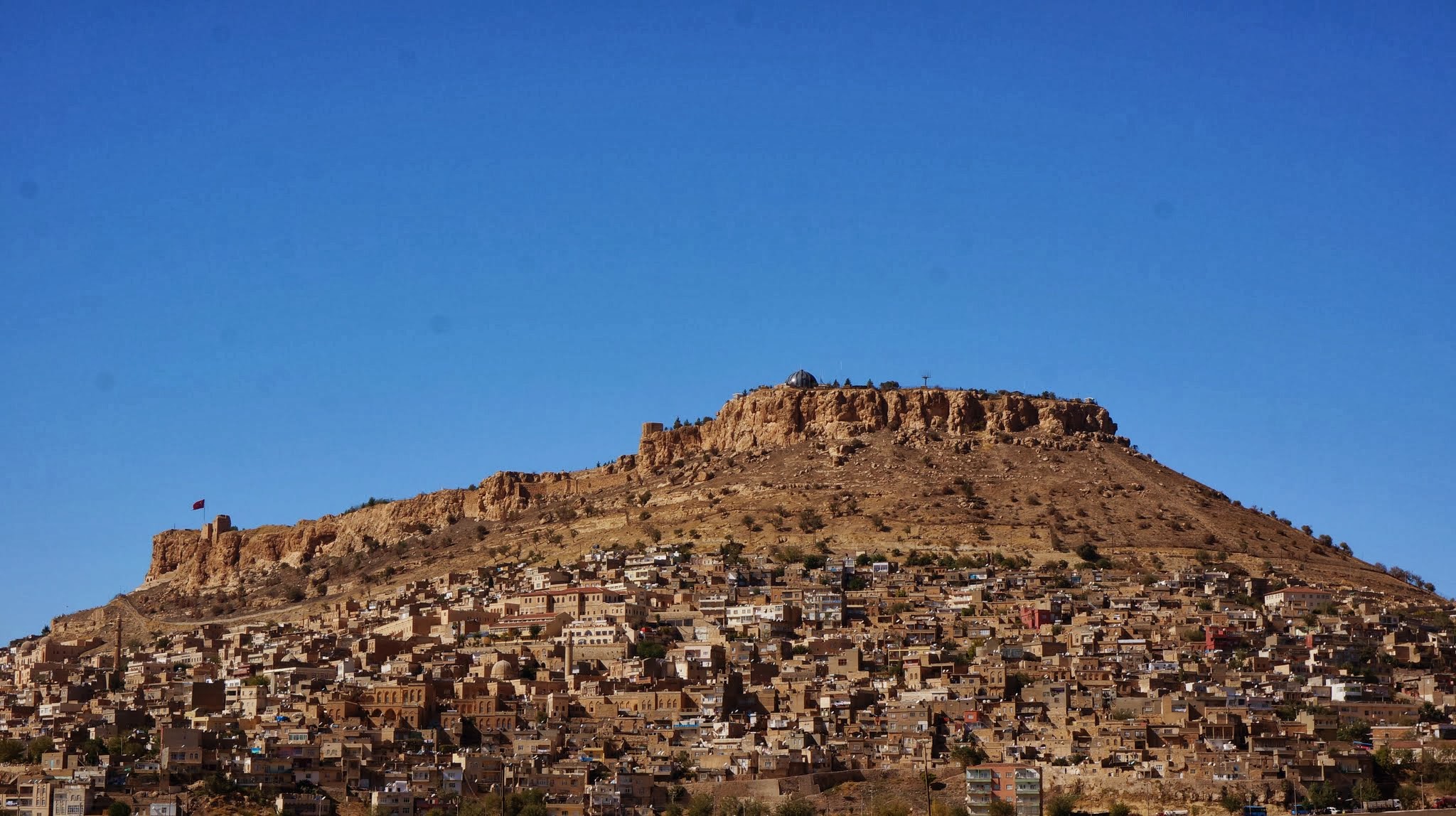
The future Patriarch Mor Ignatios Elias III was born in 1867 in the ancient city of Mardin, located
in southeastern Turkey (then part of the Ottoman Empire), in the heart of the Tur Abdin region where
Syriac Christianity had flourished for centuries. He was christened Nasri (Naṣrī in Arabic, meaning
"the Nazarene" or "helper"), the second son born to Chorepiscopus Abraham Shakir and his wife
Maryam. He had four brothers and three sisters, growing up in a large, pious Christian family that
was deeply rooted in the life and traditions of the Syriac Orthodox Church.
Mardin in the late nineteenth century was a center of Syriac Orthodox life. The city's Christian
quarter housed several churches, including the famous Church of the Forty Martyrs, and was home to
bishops, priests, monks, and a vibrant lay community that maintained its Syriac language, liturgy,
and customs despite living under Ottoman Muslim rule. The Shakir family was prominent in this
community, with Nasri's father holding the rank of Chorepiscopus (a "rural bishop" or senior priest
with limited episcopal functions), indicating both his ecclesiastical service and his family's
standing.
Tragedy struck the family when Nasri was still young—his mother Maryam died, leaving the children
motherless. Nasri was raised thereafter in the care of his elder sister Helena, who took on the
maternal role with devotion and love. This early loss may have shaped Nasri's character, developing
in him a sensitivity to suffering, a capacity for compassion, and a deep appreciation for familial
bonds that would later characterize his patriarchal ministry.
As a teenager, Nasri learned the trade of shoemaking, a respectable craft that provided honest
livelihood. He worked as a shoemaker during his youth, developing the habits of manual labor,
attention to detail, and service to others that manual trades cultivate. This humble beginning—the
future Patriarch working with his hands at a simple trade—recalls the example of the Apostle Paul,
himself a tentmaker, and demonstrates that God calls His servants from all walks of life, that
holiness is not the preserve of the learned or well-born, and that manual labor is dignified rather
than demeaning.
At some point during his youth, Nasri briefly worked for the Ottoman government for approximately
three months. The exact nature of this work is not specified in available sources, but it was common
for Christians in the Ottoman Empire to serve in various administrative, commercial, or technical
capacities. However, this secular employment did not satisfy young Nasri's deeper aspirations. His
heart was drawn to the Church, to the service of God, to the monastic and clerical life.
📚Theological Formation and Monastic Life

The turning point in Nasri's life came when Patriarch Peter IV (Mor Ignatios Peter IV), who served
as Patriarch from 1872 to 1894, recognized the young man's potential and directed him to enter
theological studies. At the Patriarch's direction, Nasri joined the theological school associated
with the Church of the Forty Martyrs in Mardin. This church and its attached school were important
centers of learning in the Syriac Orthodox tradition, where students studied Syriac language and
grammar, liturgy, Scripture, the writings of the Syriac fathers, church history, and the practical
skills necessary for priestly ministry.
Nasri proved to be a diligent and capable student, mastering the classical Syriac that was the
liturgical language of the Church, studying the Peshitta (the Syriac Bible), reading the works of
St. Ephrem the Syrian, St. Jacob of Sarug, and other Syriac theological luminaries, and absorbing
the rich liturgical and spiritual tradition of Syrian Orthodox Christianity. His education was not
merely intellectual but spiritual—formation for ministry involved prayer, fasting, participation in
the Divine Liturgy, and cultivation of the virtues necessary for a priest and future bishop.
In 1887, at approximately twenty years of age, Nasri took the decisive step of entering monastic
life at Deir al-Za'faran (the Saffron Monastery), one of the most important monasteries in the
Syriac Orthodox Church. Located near Mardin, Deir al-Za'faran had served as the patriarchal
residence from 1293 to 1924, making it the administrative and spiritual center of the Syriac
Orthodox Church for over six centuries. For a young man aspiring to church leadership, entering this
monastery was entering the heart of the tradition.
Upon entering monastic life, Nasri would have taken monastic vows—promises of celibacy, poverty,
obedience, and stability—and would have received a new name signifying his new identity. He became a
monk (dayroyo in Syriac), participating in the demanding daily rhythm of monastic life: the seven
daily offices of prayer, private meditation, study, manual work, and the cultivation of the inner
life through ascetic discipline. The monastery formed him not only intellectually but spiritually,
shaping him into the pastor and patriarch he would later become.
In 1887, the same year he entered Deir al-Za'faran, Nasri was ordained to the diaconate
(shammashutha in Syriac) by Patriarch Peter IV. This ordination marked his formal entry into the
clergy, his incorporation into the apostolic succession, his authorization to serve at the altar and
assist in the celebration of the Divine Liturgy. As a deacon, he would have read the Gospel,
prepared the holy vessels, assisted the priests, and served the liturgical needs of the monastery
and the Church.
⛪Priestly Ministry and Episcopal Consecration
Following his ordination as deacon, Nasri continued to serve in various capacities within the
Church, though detailed records of his early ministerial years are scarce. He would have progressed
through the stages of ministry common in the Syriac Orthodox tradition—from deacon to priest
(qashisho), taking on increased responsibilities in liturgical celebration, pastoral care, teaching,
and administration. His abilities, character, and devotion clearly impressed the church hierarchy,
as he was eventually selected for episcopal consecration.
The exact date and circumstances of his consecration as bishop are not specified in the available
sources, but such consecrations in the Syriac Orthodox tradition involve elaborate liturgical
ceremonies, the laying on of hands by multiple bishops (ensuring apostolic succession), extensive
prayers invoking the Holy Spirit, and the investiture with episcopal insignia including the mitre,
staff, and ring. As a bishop, he would have taken the name Elias (in English: Elijah), a prophetic
name recalling the great prophet of Israel who called the people back to faithfulness to God.
Bishops in the Syriac Orthodox Church bear significant responsibilities: they are chief pastors of
their dioceses, guardians of orthodox faith and practice, celebrants of the sacraments (particularly
ordination and chrismation), teachers of the faithful, administrators of church property and
institutions, and judges in ecclesiastical matters. Bishop Elias would have exercised these
responsibilities with diligence and pastoral sensitivity, building a reputation for wisdom,
holiness, and effective leadership.
👑Election as Patriarch: The 119th Successor of
St. Peter
The exact date of Bishop Elias's election as Patriarch is not provided in the available sources, but
he became Patriarch Mor Ignatios Elias III, taking his place as the 119th successor to St. Peter on
the Holy See of Antioch. This succession claim requires explanation: the Syriac Orthodox Church
traces its lineage to the apostolic church founded by St. Peter and St. Paul in Antioch, the city
where "the disciples were first called Christians" (Acts 11:26). The unbroken succession of
patriarchs from apostolic times to the present, maintained through the laying on of hands in
episcopal consecration, constitutes the Church's claim to apostolic authority and orthodox faith.
The title "Ignatios" (Ignatius) has been borne by virtually all Syriac Orthodox patriarchs since the
thirteenth century, honoring St. Ignatius of Antioch (died c. 107 AD), the early Christian martyr
and bishop of Antioch whose letters to various churches are treasures of early Christian literature.
By taking this name, Patriarch Elias III connected himself to this ancient witness and martyr,
little knowing that he too would die for the sake of the Church, though in a different manner than
St. Ignatius.
Patriarch Elias III assumed leadership of the Syriac Orthodox Church during an extraordinarily
difficult period. The early twentieth century brought catastrophe to the Syriac Christians of the
Middle East. The Sayfo (literally "the sword")—also known as the Syriac Genocide—of 1915 saw Ottoman
and Kurdish forces massacre hundreds of thousands of Syriac Christians in southeastern Turkey and
northern Mesopotamia. Entire villages were destroyed, churches burned, clergy killed, and survivors
scattered as refugees. The Patriarch had to shepherd his flock through this trauma, provide for
refugees, maintain church life amid chaos, and preserve the faith and tradition in the face of
existential threat.
Following World War I and the collapse of the Ottoman Empire, the traditional homeland of the Syriac
Orthodox Church was divided between the new nations of Turkey, Syria, Iraq, and Lebanon. Christian
communities that had lived in Tur Abdin and Mesopotamia for nearly two millennia found themselves
minorities in new nation-states, often facing discrimination and persecution. The Patriarch had to
navigate these new political realities, advocate for his people's rights, maintain relationships
with various governments, and ensure the survival of the Church.
In 1924, due to the increasingly difficult situation in Turkey, Patriarch Elias III made the painful
decision to relocate the patriarchal seat from its ancient home at Deir al-Za'faran to locations in
Syria and Iraq. This move, while necessary for survival, marked the end of an era—the Syriac
Orthodox Church was being pushed out of many of its ancestral lands, becoming increasingly a
diaspora church.
🕊️Pastoral Visit to Bethlehem and the Holy Land
In 1924, Patriarch Elias III made a significant pastoral visit to the Holy Land, traveling to
Bethlehem and other sacred sites. This pilgrimage had both spiritual and practical dimensions.
Spiritually, it connected the Patriarch to the physical locations of Christ's birth, ministry,
death, and resurrection—walking where Jesus walked, praying where He prayed, celebrating the Divine
Liturgy at the Church of the Nativity in Bethlehem and other holy places. Such pilgrimages were
important for patriarchs and bishops, renewing their connection to the sources of faith and
providing spiritual refreshment amid administrative burdens.
Practically, the visit to the Holy Land also involved meeting with the Syriac Orthodox community
there, encouraging the faithful, ordaining clergy, resolving disputes, and strengthening the
Church's institutional presence. The Syriac Orthodox Church had maintained a presence in Jerusalem,
Bethlehem, and other Palestinian cities for centuries, though as a minority community compared to
the Greek Orthodox, Armenian Orthodox, and Latin (Roman Catholic) churches. The Patriarch's presence
demonstrated the Church's ongoing commitment to its Palestinian flock.
🇮🇳The Crisis in Malankara: Background to the
Final Journey
To understand Patriarch Elias III's final journey to India and his death there, we must understand
the crisis that precipitated it. The Syriac Orthodox Church's relationship with the St. Thomas
Christians of India (the Malankara community) extends back centuries, with strong historical
evidence for Syriac bishops visiting India from at least the sixth century, and tradition claiming
even earlier connections.
In the early twentieth century, the Malankara Church was experiencing internal divisions over
questions of autonomy, property ownership, liturgical practices, and the authority of the Patriarch
of Antioch. Some leaders in Malankara sought greater independence from Antioch, arguing for an
autocephalous (self-governing) church structure. Others maintained that the Malankara Church should
remain under the Patriarch's ultimate authority while enjoying appropriate local autonomy. These
disagreements escalated into schism, with competing factions claiming legitimacy, disputing control
of churches and property, and appealing to British colonial courts for resolution.
The British colonial administration in India, while officially maintaining religious neutrality, was
concerned about the disorder and litigation arising from the church disputes. Lord Irwin, the
British Viceroy (the British monarch's representative and highest authority in colonial India),
wrote to Patriarch Elias III on December 1, 1930, requesting his intervention—either personally or
through a delegate—to mediate the schism and restore peace to the Malankara Church.
This invitation placed the Patriarch in a difficult position. He was already in his mid-sixties,
suffering from cardiac problems that his physicians considered serious. The journey from Mesopotamia
to India was arduous—thousands of miles by ship and train, taking weeks or months, involving harsh
conditions, uncertain food and water, and physical demands that would challenge even a healthy young
person. His doctors strongly advised against the trip, warning that the strain could kill him. His
family, particularly his elderly sister Helena (now 75 years old), begged him not to go.
But Patriarch Elias III saw the invitation not as an option he could decline but as a pastoral duty
he must fulfill. The Malankara Church was in crisis, torn by schism, with the faithful suffering.
How could he, as their spiritual father and the successor of St. Peter, remain comfortable in
Mesopotamia while his children in India suffered? His response to the Viceroy, dated December 15,
1930, accepted the invitation with certain conditions (likely concerning the scope of his mediation
authority and the respect to be shown to the patriarchal office).
✈️The Final Journey: "I Would Rather Sacrifice
My Life"
On February 6, 1931, Patriarch Mor Ignatios Elias III departed from Mosul, Iraq, beginning what
would be his final journey. He was accompanied by several companions who would serve and support him
during the mission: Mor Clemis Yuhanon Abbachi (a bishop), Rabban Quryaqos (a monk who would later
become Metropolitan Mor Ostathios Quryaqos), and Rabban Yeshu' Samuel (a young monk who would later
become the famous Metropolitan Mor Athanasius Yeshu' Samuel, known in the West as the "Scrolls
Bishop" who played a key role in bringing the Dead Sea Scrolls to scholarly attention).
The journey took the patriarchal party by various routes—likely by train to a port, by ship through
the Persian Gulf or around Arabia to India, and then by train through India to Kerala. The voyage
would have taken several weeks at minimum. For an elderly man with heart disease, every stage
presented challenges: the heat, the unfamiliar food, the confined spaces of ships and trains, the
constant motion, the stress of travel.
When his 75-year-old sister Helena made one final plea for him not to undertake this journey, the
Patriarch responded with words that have become legendary in the Malankara Church: "Death is
inevitable whether here or in India; I would rather sacrifice my life for the sake of our children
in Malankara." These words reveal his character—he was not ignorant of the risks or in denial about
his health, but he had made a deliberate choice to prioritize the Church's needs over his own
safety. He was prepared to die for his flock, like the Good Shepherd whom Jesus described: "The good
shepherd gives His life for the sheep" (John 10:11).
🙏Ministry in Malankara: Seeking Unity and Peace
Upon arriving in India in early 1931, Patriarch Elias III began an intensive program of meetings,
liturgical celebrations, and mediation efforts aimed at healing the schism and restoring unity to
the Malankara Church. The historical record indicates that he convened conciliatory meetings in
several locations throughout Kerala: Alwaye (now Aluva), Karingachira, Panampady, and Kuruppumpady.
At each location, he met with representatives of the various factions, listened to their grievances
and concerns, sought common ground, proposed solutions, and attempted to broker agreements.
The work was exhausting and emotionally draining. Mediation requires patience, wisdom, the ability
to listen deeply, the capacity to see issues from multiple perspectives, and the moral authority to
call people to rise above partisan interests for the common good. The Patriarch possessed these
qualities, but the divisions in the Church were deep, the positions entrenched, and the wounds
fresh. Progress was slow and partial.
The Patriarch also fulfilled his liturgical and sacramental duties during his time in Malankara. He
celebrated the Divine Liturgy in various churches, ordained priests and deacons, consecrated
bishops, confirmed the faithful, blessed churches and altars, and presided over the great liturgical
cycles. One particularly significant occasion was during Passion Week (Holy Week) at Kottayam, where
the Patriarch led the solemn services commemorating Christ's suffering, death, and resurrection.
These liturgical celebrations were not merely ceremonial but were integral to his mission—they
demonstrated the unity of the Church in worship, they provided grace and spiritual nourishment to
the faithful, and they modeled the proper focus on Christ rather than on human divisions.
💔The Final Days at Manjinikkara
By early February 1932, after approximately one year in India, Patriarch Elias III was exhausted.
The inability to achieve full reconciliation in the Church had weighed heavily on his heart. Though
he had made progress in some areas, the complete unity he had hoped to restore remained elusive. The
resistance to his mediation efforts from various quarters, the intransigence of some leaders, and
the realization that human pride and ambition were hindering the work of the Spirit all contributed
to his spiritual and emotional burden. Added to this spiritual weight was the physical toll of the
prolonged travel, the unfamiliar climate, the demanding schedule, and his underlying heart
condition.
On February 11, 1932, at the invitation of Qashisho (Priest) Kuriakos Elavinamannil, the Patriarch
arrived at the Mor Stephanos (St. Stephen) Church in Manjinikkara from Kallissery. Manjinikkara is a
village in the Thrissur district of Kerala, home to an ancient Syriac Orthodox congregation. The Mor
Stephanos Church there had served the faithful for generations, and the community received their
Patriarch with joy, reverence, and love.
Upon arriving, the Patriarch said something that would later be recognized as prophetic: "This place
offers us much comfort; we desire to remain here permanently." At the time, those who heard these
words likely took them as a simple expression of satisfaction with the hospitality and peaceful
atmosphere of Manjinikkara. Only later would they recognize the deeper meaning—the Patriarch would
indeed remain there permanently, for Manjinikkara would become his final resting place.
On February 12, the day after his arrival, the Patriarch requested that the priests who had come to
visit him not leave for a couple of days. This request may have been motivated by a premonition that
his end was near, a desire to have clergy present for whatever might occur, or simply a pastoral
wish to spend time with his spiritual sons. In the evening of February 12, the Patriarch recited
many prayers of the qandilo (the unction or anointing service used for healing and preparation for
death) and spent time in contemplation of the departed—prayers and spiritual exercises that suggest
he was preparing himself spiritually for death, whether consciously or guided by divine providence.
☦️The Holy Death: February 13, 1932
February 13, 1932, began as a typical day. Mor Clemis Yuhanon Abbachi, one of the bishops
accompanying the Patriarch, celebrated the Holy Qurbono (Divine Liturgy) in the morning. His
Holiness Patriarch Elias III, though not the main celebrant, gave the sermon during the liturgy. We
do not have a record of what he preached that morning, but one can imagine that he spoke of Christ
the Good Shepherd, of the Church's unity, of perseverance in faith, of the eternal life that awaits
the faithful—themes that had characterized his preaching throughout his ministry and that now,
unknowingly, constituted his final homily to the Malankara faithful.
After the liturgy, the Patriarch joined in the noon prayers—the daily offices that structure the day
for Orthodox Christians, marking the hours with psalms, hymns, and prayers. Following the prayers,
he ate lunch with his companions and the local clergy. After the meal, as was his routine, the
Patriarch spent time recording events in his journal. He was a careful chronicler of his
experiences, keeping detailed notes of his travels, meetings, impressions, and reflections. He asked
for a dictionary to clarify the meaning of a word he wanted to use in his writing—a detail that
shows his scholarly precision and his desire to express himself accurately even in his personal
journal.
Following his writing session, the Patriarch got up and began pacing about, complaining of pain in
his head. Headache, particularly severe sudden headache, can be a symptom of cardiovascular
crisis—stroke, heart attack, or related emergencies. Given his known cardiac problems, this sudden
headache was an ominous sign. Within moments, he fainted, collapsing unconscious. The monks and
priests who were present rushed to him, lifted him, and placed him on a cot.
But it was too late. The Patriarch never regained consciousness. At 2:30 PM on February 13, 1932,
his holy soul departed this life and entered into eternal rest. The prophetic words he had spoken to
his sister eighteen months earlier had come true: death had come to him in India, and he had indeed
sacrificed his life for the sake of the Malankara Church. He died in harness, working until his last
day, never resting from his pastoral labors, pouring out his life for the flock entrusted to him.
Eyewitnesses reported that as the Patriarch died, a deep gloom descended over the area, as if nature
itself mourned the passing of this holy man. The monks who had accompanied him from Mesopotamia—Mor
Clemis Yuhanon Abbachi, Rabban Quryaqos, and Rabban Yeshu' Samuel—were overcome with grief, wailing
in their sorrow. The local clergy and faithful, learning of the Patriarch's death, gathered at the
church, weeping and lamenting. The man who had come to bring them peace and unity had been taken
from them, dying in their midst, a victim of his devotion to their welfare.
⚰️The Burial: A Patriarch Laid to Rest in India
The death of the Patriarch presented an unprecedented situation for the Malankara Church. Never
before had a Patriarch of Antioch died on Indian soil. What should be done with his mortal remains?
Different opinions arose regarding the proper course of action. Some suggested that his body should
be embalmed and transported back to Mesopotamia or Syria to be buried with his predecessors at Deir
al-Za'faran or another patriarchal see. Others argued that given the circumstances of his
death—dying while serving the Malankara Church, having expressed a desire to "remain here
permanently"—he should be buried in India.
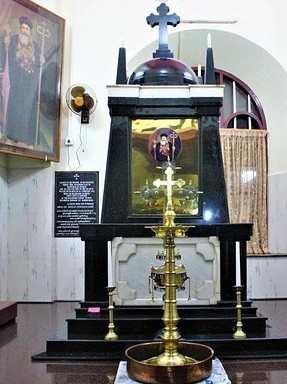
The decision was made in favor of interment in Malankara, specifically at Manjinikkara where he had
died. A plot of land to the north of the Mor Stephanos Church was identified, and steps were taken
to transfer its title deed to the Patriarchate, ensuring that the burial site would remain under
patriarchal authority and properly maintained. This decision, while controversial to some at the
time, has proven providential—the Patriarch's tomb in Manjinikkara has become a powerful symbol of
the bond between the Syriac Orthodox Church of Antioch and the Malankara Church, a concrete reminder
that the Patriarch loved the Indian faithful enough to die for them.
On February 14, 1932, the day after his death, elaborate funeral services were held for His
Holiness. The Syriac Orthodox funeral liturgy is lengthy, solemn, and rich with prayers, hymns, and
Scripture readings that affirm the resurrection hope, honor the departed, and commend the soul to
God's mercy. Multiple bishops, priests, and deacons would have participated, vesting in appropriate
funeral vestments, processing with crosses and candles, chanting the funeral hymns, censing the
body, and celebrating a Funeral Qurbono (Requiem Liturgy).
Thousands of faithful came to pay their final respects, filing past the Patriarch's body, venerating
his remains, asking his prayers, weeping for the loss of their spiritual father. The funeral cortege
processed to the designated burial site north of the church, where the Patriarch's body was laid to
rest with honor befitting his office and holiness. Over time, a tomb structure was built over the
burial site, marking it as a sacred place and facilitating pilgrimage and veneration.
🕯️The Tomb as Pilgrimage Site and Symbol
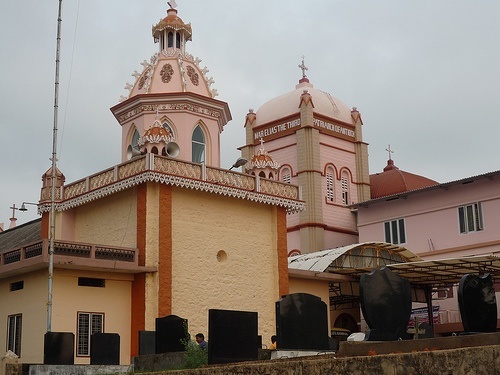
In the decades following his death, the tomb of Patriarch Elias III at Manjinikkara has become one
of the most important pilgrimage sites for the Syriac Orthodox faithful in Malankara. Every year on
February 13, the anniversary of his death, thousands of pilgrims—many walking barefoot for miles as
a sign of devotion and penance—converge on Manjinikkara from various parts of Kerala and beyond.
They come to remember the Patriarch who died for them, to pray at his tomb, to seek his
intercession, and to renew their commitment to the faith for which he sacrificed his life.
The annual commemoration includes elaborate liturgical services: evening prayers on February 12, the
Midnight Office, Morning Prayer, and the solemn Holy Qurbono celebrated by the current Catholicos of
Malankara or senior metropolitans. Special hymns composed for the occasion praise the Patriarch's
virtue, recount his sacrifice, and invoke his intercession. Sermons remind the faithful of his
example of pastoral love, his willingness to die for the Church's unity, and the ongoing need for
faithfulness to the apostolic tradition he represented.
The tomb itself has been enhanced and beautified over the years. On October 20, 1987, a significant
renovation or beautification of the tomb was completed, creating a more fitting monument to the
Patriarch's memory. The tomb structure typically features Syriac inscriptions, patriarchal symbols,
images or icons of the Patriarch, and space for pilgrims to pray, light candles, and leave
offerings. The site has become not merely a memorial but a living place of prayer and devotion,
where the faithful believe that the Patriarch continues to intercede for them before God's throne.
The presence of a patriarchal tomb in Malankara carries profound symbolic significance. It
concretely demonstrates the Syriac Orthodox Church's commitment to the Indian faithful—the Patriarch
didn't merely visit and return home, but gave his life and remains permanently. It serves as a
perpetual reminder of the unity between Antioch and Malankara, a physical link across geographical
distance. It provides a focal point for devotion and pilgrimage, strengthening the faithful's
connection to their Syriac Orthodox identity. And it testifies to future generations about the cost
of faithfulness, the reality of pastoral love, and the Church's continuing witness across cultures
and continents.
⛪Legacy and Spiritual Significance
Patriarch Mor Ignatios Elias III's legacy extends far beyond his relatively brief seventeen months
in Malankara or even his years as Patriarch. He represents several crucial truths that continue to
instruct and inspire the Syriac Orthodox faithful:
The Good Shepherd Who Lays Down His Life: Jesus said, "I am the good shepherd. The
good shepherd gives His life for the sheep" (John 10:11). Patriarch Elias III literally embodied
this principle. He knew the journey to India might kill him, but he went anyway because his sheep
needed him. He models for all pastors—patriarchs, bishops, priests—what it means to love the flock
enough to sacrifice everything for their welfare. His example rebukes any form of ministry motivated
by personal gain, comfort, or ambition.
Unity and Peace as Worth Every Cost: The Patriarch traveled thousands of miles,
spent over a year in intensive mediation efforts, and ultimately gave his life trying to heal the
schism in Malankara. This demonstrates how seriously the Church takes unity, how precious peace is,
and how much energy should be expended to overcome divisions. In an age when Christians often split
over minor disagreements or personal preferences, Patriarch Elias III's sacrifice challenges us to
pursue unity with similar dedication.
The Bond Between Antioch and Malankara: His decision to come to India despite the
dangers, and his death and burial there, created an unbreakable bond between the Syriac Orthodox
Church of Antioch and the Malankara Church. Every Malankara Orthodox Christian is reminded, when
they visit his tomb or commemorate his feast, that they are not isolated but part of an ancient
apostolic tradition, connected to Antioch, to the Syriac fathers, to two millennia of faith. This
bond is not merely institutional but personal, sealed with patriarchal blood.
Faithfulness Unto Death: Patriarch Elias III could have declined the Viceroy's
invitation, citing his health. He could have sent a delegate instead. He could have abandoned the
mediation efforts when they proved difficult. But he persevered to the end, faithful to his calling,
working until his final day. His example encourages all believers to remain faithful in their own
callings, to not give up when the work is hard, to trust that God honors faithfulness even when it
costs everything.
🙏Veneration and Commemoration
Patriarch Mor Ignatios Elias III is venerated by the faithful as a holy father and is commemorated
liturgically. His feast day of February 13 is observed throughout the Malankara Church and in many
Syriac Orthodox parishes worldwide with appropriate services, prayers, and remembrance.
The faithful pray to Patriarch Elias III, asking his intercession before God. They believe that he,
having died in service to the Church and now dwelling in the presence of God, hears their prayers
and advocates for them. Testimonies of answered prayers and miracles attributed to his intercession,
while not officially investigated or authenticated, are part of popular devotion and strengthen the
faithful's confidence in his holiness and continuing care for the Church.
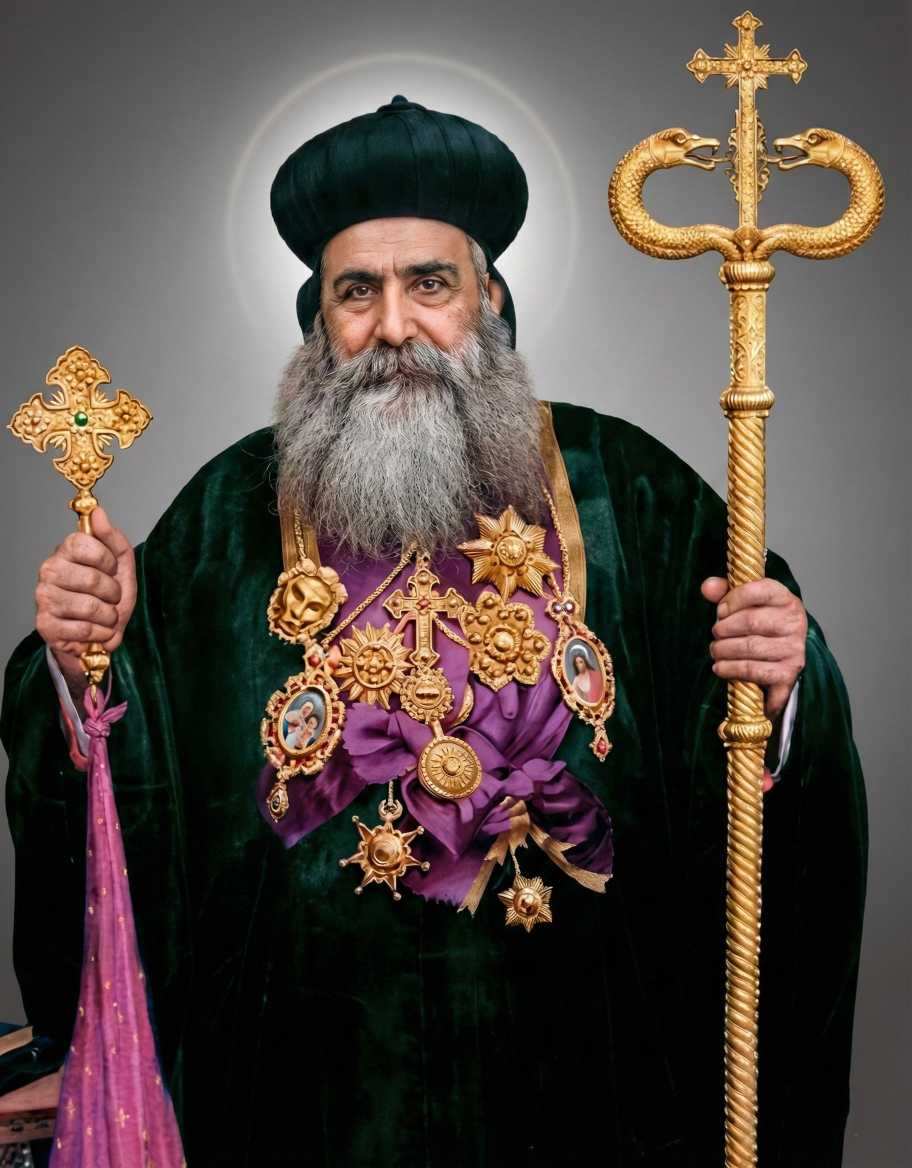
Icons of Patriarch Elias III are found in many Malankara churches. These typically depict him in
patriarchal vestments (including the distinctive hood worn by Syriac Orthodox patriarchs), holding a
staff and cross, sometimes with the tomb at Manjinikkara depicted in the background or with symbolic
elements representing his sacrifice for the Malankara Church. The icons serve as focal points for
devotion and as visual reminders of his witness.
✝️Conclusion: A Life Poured Out in Love
The life and death of Patriarch Mor Ignatios Elias III Shakir stand as a powerful testimony to the
pastoral heart of the Syriac Orthodox Church. From his humble beginnings as a shoemaker's apprentice
in Mardin to his final days as Patriarch dying in the service of the Malankara faithful, his life
demonstrates that true greatness in the Church is measured not by power or prestige but by love and
sacrifice.
His prophetic words to his sister—"I would rather sacrifice my life for the sake of our children in
Malankara"—were not empty rhetoric but genuine commitment. He proved their truth by actually doing
what he said, giving his life for the flock entrusted to him. In this, he followed the example of
Christ the Good Shepherd and of countless pastors and bishops throughout Christian history who have
understood that ministry is fundamentally about self-giving love.
His tomb at Manjinikkara stands as a permanent reminder of this truth, a place where heaven and
earth meet, where the prayers of the living faithful mingle with the intercessions of a departed
patriarch, where the love that transcends death is made visible and tangible. Every pilgrim who
walks barefoot to his tomb, every tear shed in remembrance of him, every prayer offered at his grave
testifies that love is stronger than death, that sacrifice bears eternal fruit, and that the Good
Shepherd's spirit lives on in those who follow His example.
Let us therefore pray: "O Holy Father and Patriarch Mor Ignatios Elias III, faithful shepherd who
gave your life for the flock, beloved father who called us your children, blessed pastor who died
seeking our unity and peace—intercede for us before the throne of grace. Pray for the Malankara
Church that you loved unto death. Pray for the Syriac Orthodox Church throughout the world. Pray for
all pastors and bishops, that they may have your pastoral heart. Pray for all the faithful, that we
may be worthy of the sacrifice you made. Through your prayers and through the mercy of Christ our
God, may we be kept in the true faith, preserved in unity, and brought at last to the Kingdom where
you now dwell in eternal joy. Amen."
✠ Memory Eternal | Dhukronoho l'alam w'l'olam 'olmin
May his memory be eternal and his intercession be with us forever.