📜From Persecutor to Apostle
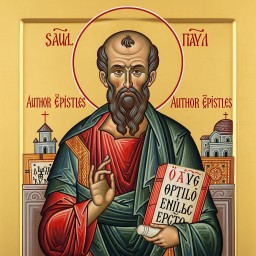
Saint Paul, born Saul in the city of Tarsus in Cilicia (modern-day Turkey), stands as one of the
most extraordinary figures in Christian history—a man whose transformation from fierce persecutor of
the Church to its greatest missionary exemplifies the limitless power of divine grace. Born into a
devout Jewish family of the tribe of Benjamin, he was a Roman citizen by birth, a privilege that
would later serve God's purposes in his apostolic ministry. His father ensured he received the
finest education, sending him to Jerusalem to study under the renowned Rabbi Gamaliel, where he
became a Pharisee of Pharisees, zealous for the Law of Moses and the traditions of the elders.
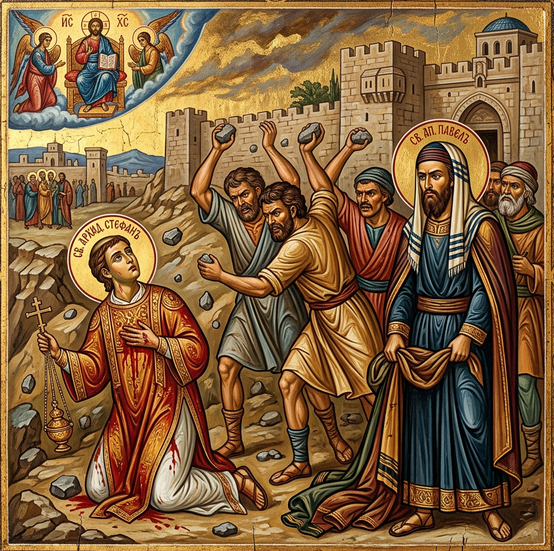
As a young man, Saul embodied religious fervor taken to its darkest extreme. He was present at the
stoning of Saint Stephen the Protomartyr, holding the garments of those who cast the stones,
consenting to his death. This event marked the beginning of his campaign of terror against the
nascent Church. He went from house to house in Jerusalem, dragging men and women believers to
prison. He obtained letters from the High Priest authorizing him to pursue Christians even to
foreign cities, breathing threats and murder against the disciples of the Lord. In his own later
testimony, he confessed: "I persecuted this Way to the death, binding and delivering to prison both
men and women."
⚡The Damascus Road Encounter
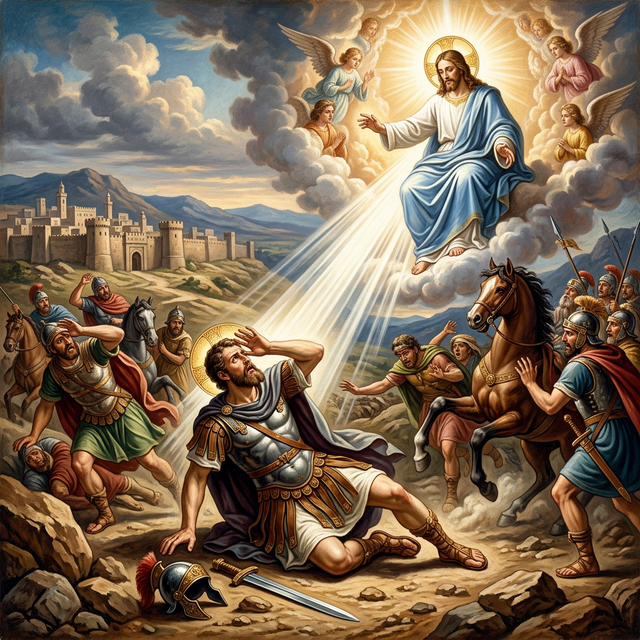
On the road to Damascus, armed with authority to arrest and extradite Christians, Saul experienced
an encounter that would forever alter the course of human history. At midday, a light from heaven,
brighter than the sun, suddenly surrounded him and his companions. He fell to the ground and heard a
voice speaking to him in the Hebrew language: "Saul, Saul, why are you persecuting Me?" When he
asked, "Who are You, Lord?" the answer came: "I am Jesus, whom you are persecuting. It is hard for
you to kick against the goads."
This revelation shattered everything Saul believed he knew. The Jesus whose followers he was hunting
was not a dead heretic but the Living Lord, speaking from heaven in glory. His companions heard the
sound but saw no one; they stood speechless while Saul, rising from the ground, discovered he was
blind. For three days he remained without sight, neither eating nor drinking, in what can only be
described as a mystical death and rebirth. During this time, the Lord prepared a disciple in
Damascus named Ananias to go to Saul, lay hands on him, and restore his sight.
When Ananias hesitantly obeyed—having heard of Saul's reputation as a persecutor—he addressed him as
"Brother Saul" and declared: "The Lord Jesus, who appeared to you on the road, has sent me that you
may receive your sight and be filled with the Holy Spirit." Immediately, something like scales fell
from Saul's eyes, and he could see. He arose and was baptized, receiving the Holy Spirit and
beginning his new life as Paul, the chosen vessel of Christ to bear His name before Gentiles, kings,
and the children of Israel.
"I have been crucified with Christ; it is no longer I who live, but Christ lives in me." — Galatians
2:20
🌍The Three Missionary Journeys
After spending time in Arabia and returning to Damascus, where he immediately began preaching Christ
in the synagogues, Paul eventually traveled to Jerusalem. There, through the mediation of Saint
Barnabas, he met the Apostles Peter and James. Later, the Holy Spirit specifically called him and
Barnabas for missionary work: "Set apart for Me Barnabas and Saul for the work to which I have
called them." Thus began the systematic evangelization of the Gentile world.
Paul's first missionary journey (c. 46-48 AD) took him through Cyprus and Asia Minor, establishing
churches in Antioch of Pisidia, Iconium, Lystra, and Derbe. In Lystra, he healed a crippled man and
was first worshiped as a god, then stoned and left for dead—yet he rose and continued preaching. His
second journey (c. 49-52 AD) carried the Gospel into Europe for the first time. In response to a
vision of a Macedonian man pleading, "Come over to Macedonia and help us," Paul crossed into Greece,
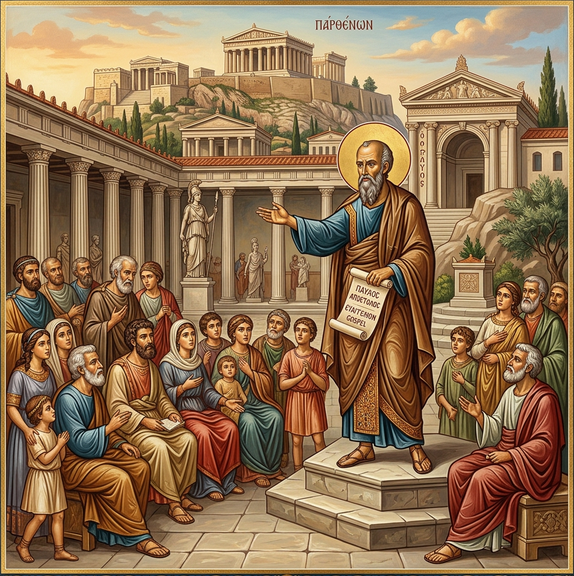
establishing churches in Philippi, Thessalonica, Berea, Athens, and Corinth. In Athens, he delivered
his famous Areopagus sermon, declaring the "Unknown God" whom the Greeks ignorantly worshiped.
The third journey (c. 53-57 AD) centered on a prolonged ministry in Ephesus, where Paul performed
extraordinary miracles and where the entire city was turned upside down by the power of the Gospel,
resulting in a riot by silversmiths whose trade in idols was threatened. Throughout these journeys,
Paul established the pattern of apostolic ministry: preaching in synagogues first, then turning to
the Gentiles when rejected; performing signs and wonders; appointing elders in every church; and
maintaining contact with established communities through letters and return visits.
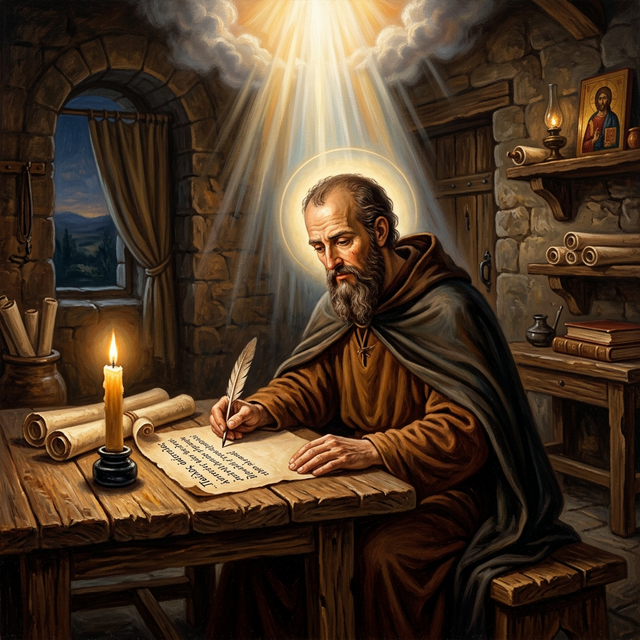
✍️The Pauline Epistles: Theology for the Ages
Saint Paul's theological legacy is preserved in his epistles, which constitute nearly half of the
New Testament. These letters were not abstract theological treatises but pastoral responses to real
situations in real churches, addressing heresies, moral failures, doctrinal confusions, and
practical questions. Yet through the inspiration of the Holy Spirit, they transcended their
immediate occasions to become timeless expositions of Christian truth.
The Epistle to the Romans, written from Corinth around 57 AD, is Paul's most systematic theological
work, presenting the Gospel of justification by faith, the universality of sin, the righteousness of
God revealed in Christ, the relationship between Law and grace, and God's plan for both Jews and
Gentiles. The Corinthian correspondence addresses church divisions, moral disorders, liturgical
abuses, spiritual gifts, and provides the magnificent discourse on love (1 Corinthians 13) and the
resurrection (1 Corinthians 15).
Galatians, possibly Paul's earliest letter, fiercely defends justification by faith against
Judaizers who sought to impose circumcision and the Mosaic Law on Gentile converts. The Prison
Epistles—Ephesians, Philippians, Colossians, and Philemon—written during Paul's Roman imprisonment,
explore the mystery of Christ and the Church, the cosmic lordship of Christ, and the practical
outworking of Christian living. The Pastoral Epistles—1 and 2 Timothy and Titus—provide instructions
for church order, qualifications for clergy, and warnings against false teachers. The letter to the
Hebrews (traditionally attributed to Paul in the Syriac Orthodox tradition, though its authorship is
debated) presents Christ as the fulfillment of the Old Testament priesthood and sacrificial system.
Through these writings, Paul articulated the fundamental doctrines of Christianity: justification by
faith, the universality of salvation in Christ, the Church as the Body of Christ, the indwelling of
the Holy Spirit, the resurrection of the dead, and the supremacy of love. His theology of grace
transformed human understanding of God's relationship with humanity, moving from a religion of
law-keeping to one of faith, love, and transformation by the Holy Spirit.
⛓️Sufferings and Imprisonments
Paul's ministry was marked by extraordinary suffering, which he catalogued in his second letter to
the Corinthians: "Five times I received forty stripes minus one. Three times I was beaten with rods;
once I was stoned; three times I was shipwrecked; a night and a day I have been in the deep; in
journeys often, in perils of waters, in perils of robbers, in perils of my own countrymen, in perils
of the Gentiles, in perils in the city, in perils in the wilderness, in perils in the sea, in perils
among false brethren; in weariness and toil, in sleeplessness often, in hunger and thirst, in
fastings often, in cold and nakedness."
His final journey to Jerusalem, undertaken despite prophetic warnings of imprisonment, resulted in
his arrest in the Temple when Asian Jews falsely accused him of bringing Gentiles into the holy
place. After being rescued from a mob intent on killing him, Paul was held in custody in Caesarea
for two years under Governors Felix and Festus. Exercising his right as a Roman citizen, he appealed
to Caesar, which led to his transportation to Rome. The journey included a harrowing shipwreck on
Malta, where Paul performed miracles of healing and prophesied their deliverance.
👑Martyrdom in Rome
Paul arrived in Rome around 60 AD and spent two years under house arrest, continuing to preach the
Kingdom of God to all who came to him. Ancient tradition, preserved in the writings of Church
Fathers, recounts that Paul was released after this first
imprisonment and resumed his missionary work, possibly traveling to Spain as he had intended, and
returning to the eastern Mediterranean to visit the churches he had founded.
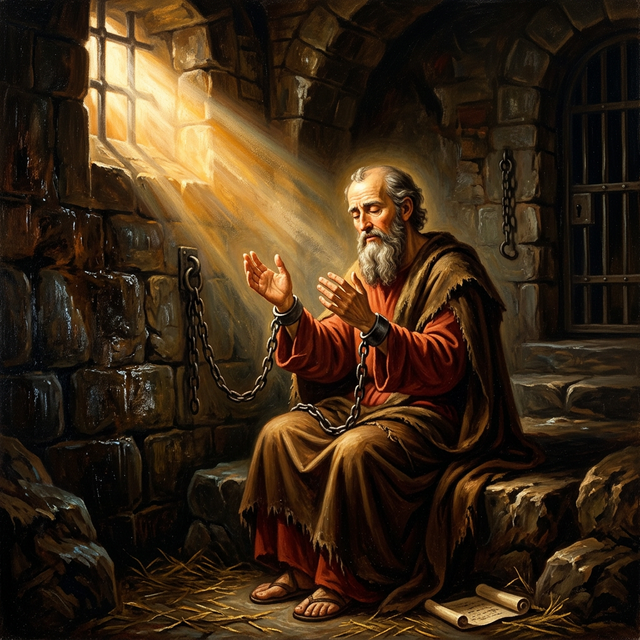
During the persecution of Emperor Nero (64-67 AD), following the Great Fire of Rome, Paul was
arrested a second time. The tradition of the Syriac Orthodox Church, confirmed by early Christian
writers, states that Paul was imprisoned in the Mamertine Prison in Rome, where he wrote his final
epistle to Timothy, knowing his martyrdom was imminent. In those poignant words, he declared: "I
have fought the good fight, I have finished the race, I have kept the faith. Finally, there is laid
up for me the crown of righteousness, which the Lord, the righteous Judge, will give to me on that
Day."
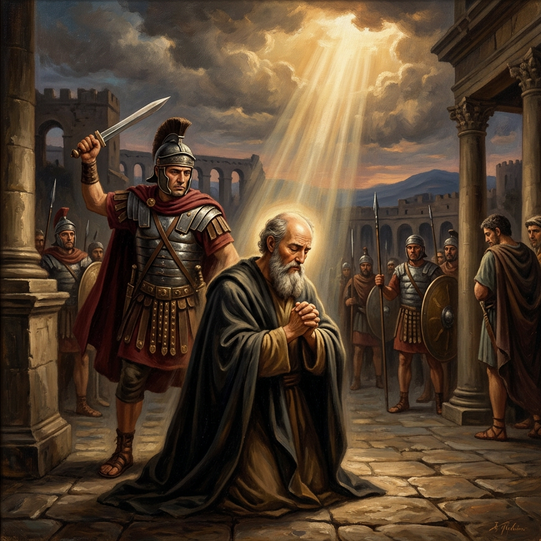
According to unanimous testimony from the earliest Christian sources—including Saints Clement of
Rome, Ignatius of Antioch, and Irenaeus—Paul was beheaded on the Ostian Way in Rome, at a place
called Aquae Salviae (now Tre Fontane), around 67 AD. As a Roman citizen, he was spared the ignominy
of crucifixion and instead executed by the sword. Tradition holds that his head bounced three times,
and at each place a spring of water erupted from the ground. His body was buried by pious Christians
and later enshrined in the Basilica of Saint Paul Outside the Walls, where it remains venerated to
this day. In the Syriac Orthodox tradition, Saints Peter and Paul are commemorated together on June
29, recognizing them as the two pillars of the Church—Peter, the Apostle to the Jews, and Paul, the
Apostle to the Gentiles.
🕊️Legacy and Significance
Saint Paul's impact on Christianity cannot be overstated. More than any other figure except Christ
Himself, Paul shaped Christian theology, ecclesiology, and mission. He was the primary instrument
through which the Gospel crossed from its Jewish origins into the Gentile world, transforming
Christianity from a Jewish sect into a universal religion. His insistence that Gentile converts need
not be circumcised or follow the Mosaic Law freed the Church from ethnic and ceremonial
restrictions, allowing it to become truly catholic—universal.
His theology of grace, elaborated especially in Romans and Galatians, became the foundation for
understanding salvation: not as earned through human effort or law-keeping, but as a free gift
received through faith in Christ. His vision of the Church as the Body of Christ, with many members
having different gifts but united by one Spirit, provided the theological framework for ecclesiology
that endures to this day. His teachings on Christian living—the fruit of the Spirit, the armor of
God, the supremacy of love, the sanctity of marriage, the dignity of labor—continue to guide
believers in practical holiness.
In the Syriac Orthodox tradition, Saint Paul holds a place of supreme honor. His epistles are read
extensively in the liturgy, and his feast is celebrated with great solemnity. The Church recognizes
him not merely as a brilliant theologian or tireless missionary, but as a living icon of divine
mercy—proof that no one is beyond redemption, that God can transform the greatest enemy into the
most devoted servant, and that grace is more powerful than sin. His life demonstrates that what
matters is not our past but our response to God's call, not our worthiness but God's power to make
us worthy.
Prayer for Intercession
O Holy Apostle Paul, chosen vessel of Christ, teacher of the Gentiles, and pillar of the Church, you
who were transformed from persecutor to preacher, from enemy to apostle, who traveled throughout the
world proclaiming the Gospel, who suffered chains, beatings, shipwreck, and every hardship for the
sake of Christ, who penned immortal epistles that continue to illumine the Church, and who sealed
your testimony with martyrdom—intercede for us before the throne of grace. Pray that we may know the
same transforming power of Christ that turned you from darkness to light, that we may serve Him with
the same zeal and devotion you displayed, that we may persevere through trials as you persevered,
and that we too may finish our race and keep the faith. Through your prayers, may we attain to the
crown of righteousness and stand before the Lord in that Day. Amen.