🎣The Fisherman Called by Christ
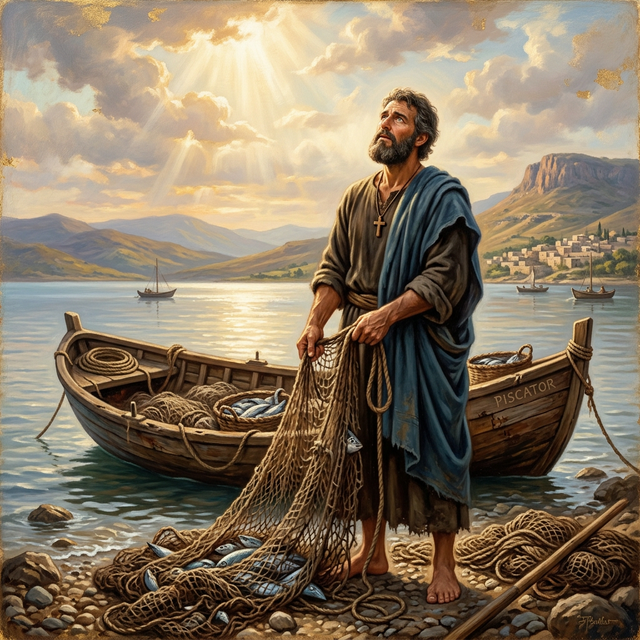
St. Peter was a fisherman of Galilee, born Simon, the son of John (or Jonah). He came from the
village of Bethsaida on the shores of the Sea of Galilee, where he lived with his wife and worked
with his brother Andrew in the family fishing business. His life changed forever when Andrew, who
had been following John the Baptist, brought him to meet Jesus.
When Jesus first met Simon, He looked at him and declared a prophetic truth that would shape
history: "You are Simon, son of John. You shall be called Kefa" (which is translated Peter, meaning
"Rock"). This was not merely a change of name but a divine commission. In Aramaic, the language our
Lord spoke, "Kefa" means rock or stone—a name that signified the role Peter would play in the
establishment of Christ's Church.
Peter became one of the first disciples to follow Jesus. When Christ called him and Andrew, saying
"Follow Me, and I will make you fishers of men," they immediately left their nets and followed Him.
This decisive response characterized Peter's entire ministry—impulsive, wholehearted, and passionate
in his devotion to Christ.
Christ's Promise to Peter
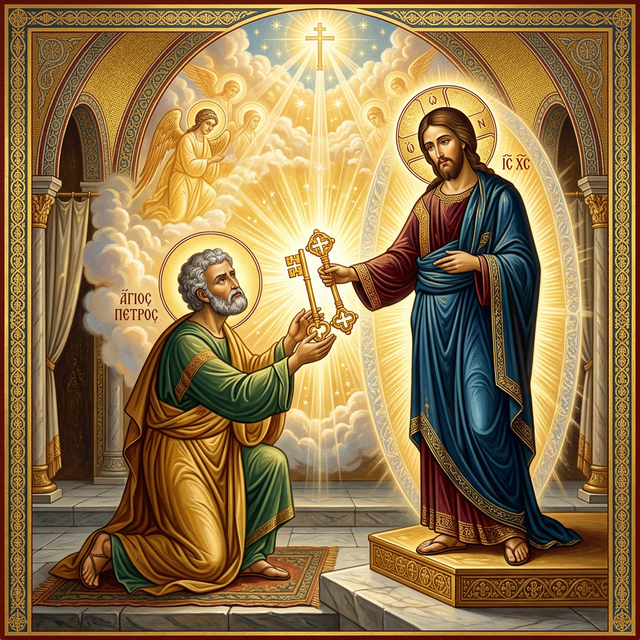
"You are Peter (Kefa), and upon this rock I will build My Church, and the gates of Hades shall not
prevail against it. I will give you the keys of the kingdom of heaven, and whatever you bind on
earth shall be bound in heaven, and whatever you loose on earth shall be loosed in heaven." —
Matthew 16:18-19
👑Leadership Among the Apostles
The Gospels speak about Peter more than any other Apostle, demonstrating his central role among the
Twelve. He consistently appears first in every list of the Apostles, and his name is mentioned more
times than all the other disciples combined. This prominence was not accidental but reflected
Christ's deliberate choice to establish Peter as the leader of the apostolic college.
Peter was honored by Christ on numerous special occasions. Jesus stayed at Peter's home in Capernaum
and healed his mother-in-law when she was sick with fever. Christ preached to the crowds from
Peter's fishing boat. When Jesus walked on water, it was Peter whom He invited to come to Him across
the waves. Peter witnessed the Transfiguration on Mount Tabor, where he saw Christ glorified
alongside Moses and Elijah. He was one of the three chosen to accompany Jesus during His agony in
the Garden of Gethsemane.
Peter frequently acted as spokesman for the other Apostles. When Jesus asked, "Who do you say that I
am?" it was Peter who made the great confession: "You are the Christ, the Son of the living God."
When many disciples were leaving Jesus because of His teaching about the Eucharist, it was Peter who
said, "Lord, to whom shall we go? You have the words of eternal life, and we have believed and have
come to know that You are the Holy One of God."
😢Weakness and Restoration
The Gospels honestly record not only Peter's strengths but also his weaknesses, showing us a fully
human portrait of this great saint. His impulsive nature sometimes led him astray. He rebuked Jesus
when Christ spoke of His coming passion, earning the sharp correction: "Get behind me, Satan!" His
attempt to walk on water faltered when his faith wavered. At the Transfiguration, he spoke without
thinking, suggesting they build three tents.
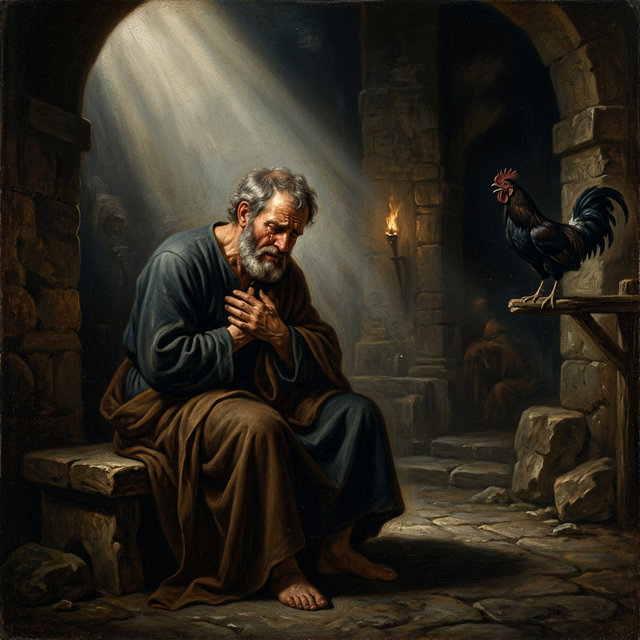
Most painfully, Peter's threefold denial of Christ during the Passion stands as one of the most
human moments in Scripture. After boldly declaring that he would die with Jesus rather than deny
Him, Peter was confronted by a servant girl in the high priest's courtyard. Three times he denied
even knowing Christ. When the rooster crowed and Jesus turned to look at him, Peter went out and
wept bitterly.
Yet this failure became the prelude to restoration and greater service. After the Resurrection,
Jesus appeared to Peter and, by the Sea of Galilee, asked him three times: "Simon, son of John, do
you love Me?" Three times Peter affirmed his love, and three times Jesus commissioned him: "Feed My
lambs... Tend My sheep... Feed My sheep." The threefold questioning mirrored the threefold denial,
offering complete restoration and confirming Peter's role as shepherd of Christ's flock.
Peter's restoration teaches us that Christ does not abandon us in our failures but uses our
weaknesses, when repented, to make us more compassionate and effective servants. The one who fell
became the one who would strengthen his brothers.
⛪Foundation of the Apostolic See of Antioch
The FIRST See of Peter: Antioch (37 AD)
On February 22, AD 37, Saint Peter founded the See of Antioch, establishing the FIRST Apostolic
Throne that bears his name. This fact is attested by many saints and fathers of the earliest
times, including Saint Ignatius of Antioch (who was ordained by Peter himself) and Pope Saint
Clement of Rome.
The Apostolic Throne at Antioch holds a unique and exalted position as the FIRST See of Peter,
established before his later ministry in Rome. This priority is not merely chronological but
also theological and historical. Antioch was where believers were first called "Christians"
(Acts 11:26), where the Gospel was first preached systematically to Gentiles, and where the
early Church took its most definitive form.
It was fitting that the Prince of the Apostles should take under his particular care and
surveillance this great city, which was then the capital of the East and the third-largest city
in the Roman Empire after Rome and Alexandria. In Antioch, the faith took such deep roots that
it became the cradle of gentile Christianity. Here Peter's voice could be heard by
representatives of the three largest nations of antiquity: the Hebrews, the Greeks, and the
Latins.
Saint John Chrysostom, the great Doctor of the Church who himself served as Patriarch of
Constantinople, testifies that Saint Peter remained in Antioch for a long period. Saint Gregory
the Great states that Peter was seven years Bishop of Antioch. Though he did not reside there
continuously, he governed its apostolic activity with the wisdom that his divine mandate from
Christ assured.
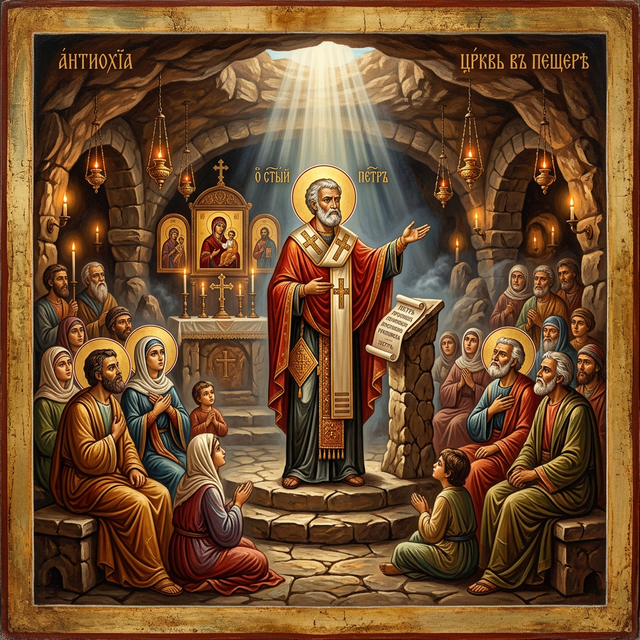
St. Peter's Cave Church: In Antioch, Peter established a church in a cave on
Mount Starius (Silpius), where the early Christians would gather for worship, away from
persecution. This cave church still exists today in Antakya, Turkey, and remains a powerful
testimony to Peter's foundational ministry. It is one of the oldest Christian worship sites in
the world, hallowed by the prayers and presence of the Prince of the Apostles himself.
📅Peter's Ministry Timeline
-
c. 30 AD - Called by Christ
Simon and Andrew leave their nets to follow Jesus on the shores of Galilee
-
c. 30-33 AD - Ministry with Christ
Witnesses the Transfiguration, walks on water, makes the great confession at Caesarea Philippi
-
33 AD - Passion and Resurrection
Denies Christ three times, witnesses the empty tomb, receives restoration and commission by the Sea
of Galilee
-
33 AD - Pentecost
Preaches the first sermon, 3,000 souls added to the Church (Acts 2)
-
37 AD - Antioch
Founds the See of Antioch on February 22, establishing the first Petrine throne
-
c. 42-44 AD - Jerusalem Council
Imprisoned by Herod Agrippa, miraculously freed by an angel, participates in the Council of
Jerusalem
-
c. 42-67 AD - Rome
Travels to Rome, ministers to both Jewish and Gentile communities, strengthens the Church
-
64-67 AD - Martyrdom
Crucified upside down during Nero's persecution, buried at the Vatican
✝️The Prince of Apostles
After Pentecost, Peter emerged as the undisputed leader of the early Church. It was Peter who
preached the first sermon on the day of Pentecost, resulting in three thousand converts. It was
Peter who performed the first miracle in the name of Jesus, healing the lame man at the Beautiful
Gate. It was Peter who received the vision of the sheet with unclean animals, opening the door for
Gentiles to enter the Church without first becoming Jews.
The Book of Acts records many of Peter's mighty works: he raised Tabitha from the dead in Joppa, his
shadow healed the sick as he passed by, and an angel freed him from prison when Herod Agrippa sought
to kill him. He baptized the first Gentile convert, Cornelius the centurion, and his household. At
the Council of Jerusalem around 49 AD, it was Peter who stood up to declare that Gentile converts
need not observe all the Mosaic Law.
Peter wrote two epistles that bear his name in the New Testament. In these letters, he addressed
Christians scattered throughout Asia Minor, encouraging them to stand firm in persecution, warning
them against false teachers, and reminding them of the sure hope they have in Christ's return. His
first epistle speaks profoundly of Christ as the cornerstone and believers as living stones being
built into a spiritual house.
🏛️Ministry and Martyrdom in Rome
Ancient tradition, supported by numerous early Church fathers, attests that Peter eventually made
his way to Rome, the capital of the empire. There he ministered to the growing Christian community,
which included both Jews and Gentiles. Rome at this time had a substantial Jewish population, and
Peter, though called the Apostle to the Jews, had also been the first to preach to the Gentiles.
In his First Epistle, Peter writes from "Babylon" (1 Peter 5:13), a cryptic reference that early
Christians understood to mean Rome. This code name reflected Rome's status as a center of worldly
power and, increasingly, as a source of persecution for the Church. Peter's ministry in Rome placed
him at the heart of the empire, where his witness would have the greatest impact.
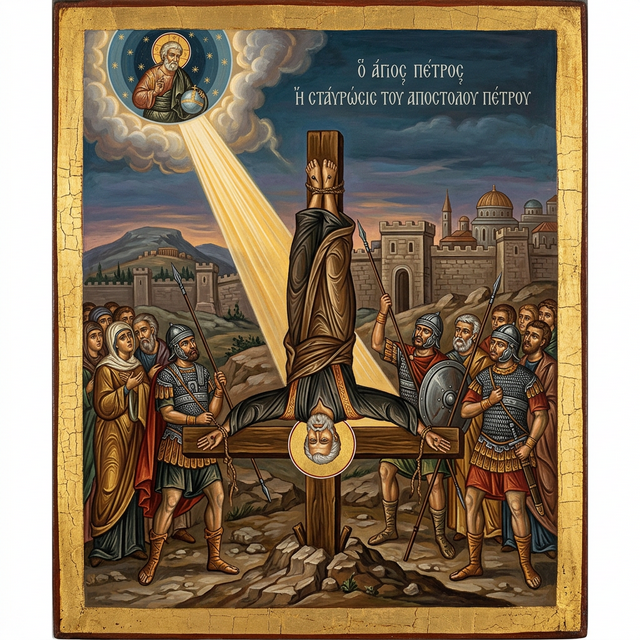
During the reign of Emperor Nero, one of history's most notorious persecutors of Christians, Peter
faced his final test. The traditional date of his martyrdom is 67 AD, though some scholars place it
earlier, in 64 AD, during the great persecution that followed the fire of Rome. According to
unanimous early testimony from Church fathers including Clement of Rome, Ignatius of Antioch,
Tertullian, and Eusebius, Peter was crucified in Rome.
The manner of Peter's death fulfills Christ's prophecy in John 21:18-19, where Jesus told him: "When
you are old, you will stretch out your hands, and another will dress you and carry you where you do
not wish to go." Early Christian tradition, recorded by Origen and Jerome, states that Peter
requested to be crucified upside down, declaring himself unworthy to die in the same manner as his
Lord.
This final act of humility perfectly characterized the man whom Christ had transformed from an
impulsive fisherman into the Rock of the Church. Peter, who had once walked on water toward Christ
and then sank in doubt, who had confessed Christ as the Son of God and then denied Him three times,
who had been restored and commissioned by the Risen Lord—this same Peter sealed his testimony with
his blood in Rome.
St. Peter's tomb lies beneath St. Peter's Basilica in Vatican City. Archaeological excavations in
the 20th century discovered what scholars believe to be the apostle's burial site, complete with
ancient graffiti invoking his name. His relics remain among the most venerated in all of
Christendom.
📖Peter's Lasting Legacy
St. Peter's significance to the Syriac Orthodox Church and all of Christianity cannot be overstated.
As the first Patriarch of Antioch, he established one of the most ancient and venerable apostolic
sees. The Syriac Orthodox Church traces its apostolic succession directly back to Peter through an
unbroken line of patriarchs from that foundational moment in 37 AD.
Antioch was not merely another city in Peter's ministry—it was the place where the Gospel took root
among the Gentiles, where the disciples were first called "Christians," and where the universal
mission of the Church became manifest. The See of Antioch represents the bridge between Jewish and
Gentile Christianity, between East and West, between the Aramaic-speaking world of Jesus and the
Greek-speaking world of the Roman Empire.
Peter's life teaches us about the transforming power of Christ's grace. From fisherman to apostle,
from denier to confessor, from impetuous disciple to wise shepherd—Peter's journey mirrors our own
path of faith. His failures remind us that sanctity does not require perfection, but rather
repentance, humility, and perseverance. His restoration shows us that Christ can use even our
greatest failures for His glory.
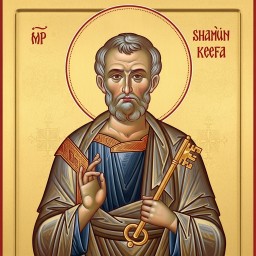
The keys that Christ gave to Peter symbolize the authority He invested in His Church to proclaim the
Gospel, to bind and loose, to forgive sins and to guard the deposit of faith. This authority
continues in the Church through apostolic succession, flowing from Peter and the apostles through
generations of bishops who guard and proclaim the same faith once delivered to the saints.
Peter's Own Words
"Come to Him, a living stone, rejected by men but in God's sight chosen and precious; and like
living stones be yourselves built into a spiritual house, to be a holy priesthood, to offer
spiritual sacrifices acceptable to God through Jesus Christ." — 1 Peter 2:4-5
🙏Veneration and Intercession
The Syriac Orthodox Church venerates St. Peter as the Prince of the Apostles and the first Patriarch
of Antioch. His feast day, celebrated on June 29 together with St. Paul, is one of the great feasts
of the Church. On this day, Orthodox Christians around the world commemorate the martyrdom of these
two pillars of the faith, whose blood watered the soil of Rome and whose teaching continues to
nourish the Church.
The liturgical hymns of the Church celebrate Peter's confession of faith, his leadership of the
apostles, his miracles and preaching, and his glorious martyrdom. The Syriac tradition particularly
honors Peter's establishment of the See of Antioch, seeing in this act the foundation of the
Church's hierarchical structure and the beginning of apostolic succession in the Middle East.
St. Peter is invoked as a powerful intercessor before the throne of God. He who held the keys of the
kingdom on earth is believed to exercise his ministry of prayer in heaven, presenting our petitions
before Christ. Fishermen, net makers, and those who work on the sea especially seek his patronage,
as do those struggling with doubt or those who have fallen and seek restoration in their faith.
Pilgrims from around the world visit sites associated with St. Peter: the cave church in Antakya
(ancient Antioch), where he preached and celebrated the Eucharist; St. Peter's Basilica in Rome,
built over his tomb; and Capernaum in Galilee, where his house has been excavated. These holy places
serve as tangible connections to the apostle who knew Christ in the flesh and proclaimed Him to the
ends of the earth.
Prayer to St. Peter
O glorious Prince of the Apostles, St. Peter, you who received from Christ the keys of the
kingdom of heaven and the supreme pastoral authority over His flock: obtain for us the grace to
root out from our hearts all that is opposed to the divine will, that we may be made worthy to
participate in the heavenly kingdom which you have opened to the faithful by your preaching and
sealed with your blood. May we, like you, confess Christ before men and build our lives upon the
rock of His teaching. Through your intercession, may we stand firm in the faith you proclaimed,
unwavering in our devotion to the One you loved and served, even unto death. O Holy Apostle
Peter, first Patriarch of Antioch, pray for us! Amen.