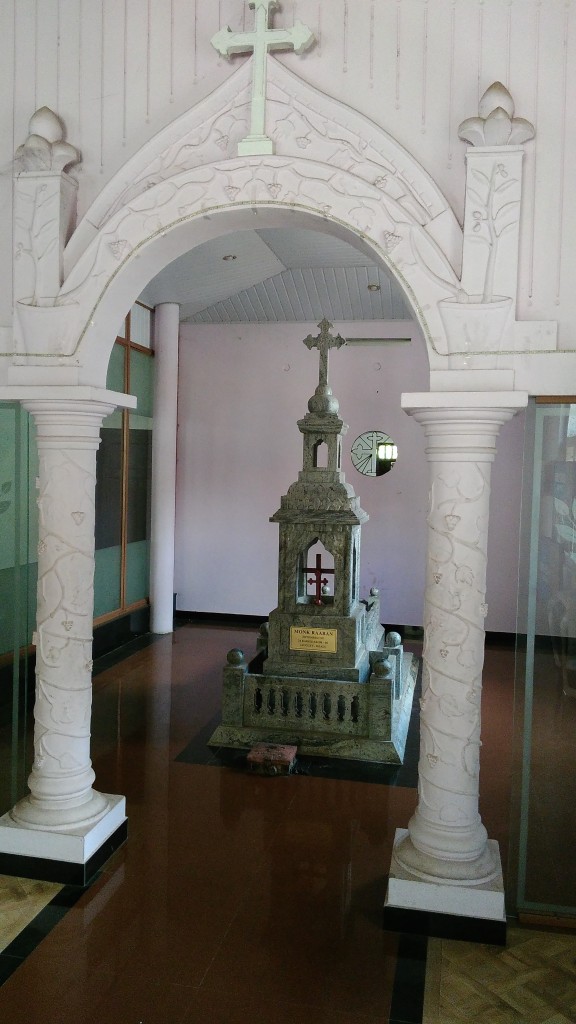
📖Historical Context: The Syrian Connection
The tradition that St. Thomas, one of the disciples of Jesus Christ, preached the Gospel in India
around 52 AD is advocated and accepted by many historians. The Malankara Church, born from this
apostolic preaching, has been nourished by holy fathers sent from the Apostolic Throne of Antioch
throughout its history.
During the first 300 years after St. Thomas's mission, the Indian Church existed as a shepherdless
community without an episcopal hierarchy. This changed dramatically in 345 AD when a significant
Syrian immigration occurred under the leadership of Cana Thoma, directed by the Patriarch of
Antioch. This group of 400 members consisted of 72 clans and was led by a bishop named Mor Youseph.
The Church in India welcomed Bishop Mor Youseph, accepting all the doctrines and rituals of the
Syrian Church. Through this connection, Sunday became the Lord's Day, the Apostolic tradition of
facing East during prayer was introduced, and Aramaic—the language of our Lord, His Mother, and the
Apostles—became the liturgical language. St. James's Liturgy of the first century in Syriac was
introduced for divine worship, and leavened bread was used for the Holy Qurbono. These traditions
continue to this day.
Following this historic immigration, Christians in India came to be known as 'Syrians,' a name that
honors the ecclesiastical and cultural connection with the Apostolic See of Antioch and the Syrian
Orthodox tradition.
⛵The Second Syrian Immigration
In 822 AD, another wave of Syrian immigration reached the shores of India. Led by the merchant Sabor
Iso and accompanied by two bishops—Mor Sabor and Mor Apharat—this group settled around Quilon. The
bishops traveled throughout Malankara, continuing the Gospel work and establishing numerous
churches.
These holy bishops were commonly called "Kadeesse" (saints) by the faithful, and churches were
established to venerate them, now known as Kadeessa churches. The local kings granted them certain
privileges through copper plates, such as the famous Thareessa Pally Cheppeds, which stand as
historical testimony to their honored position in society.
✨The Mission of Mor Danha and Rabban
At the beginning of the 10th century, the Holy Apostolic Throne of Antioch sent another crucial
mission to strengthen the Church in Malankara. In 905 AD, a four-member missionary team was
dispatched by Mor Athanasius, The Grand
Metropolitan of the East ( Similar to Catholicos / Maphrian)t, under the direction of Patriarch Dionysious II of Antioch.
The team was led by Bishop Mor Danha and included three monks: Rabban, Mor Younan, and Mor Aban.
These holy fathers undertook an arduous journey from the ancient Monastery of Deir ez-Za'faran
(Kurkumo Dayro) in Turkey to the distant shores of India, traveling thousands of miles when modern
transportation did not exist. Their dedication exemplifies the extraordinary commitment of the
Syrian Church to maintaining communion with its daughter church in Malankara.
🏡Monk Rabban in Chennithala
Upon arriving in Malankara, Monk Rabban found hospitality in the home of the Nadayil family in
Chennithala, who were parishioners of the ancient Niranam Church. The Nadayil family, particularly
Nadayil Kuruvila, provided shelter and support for the holy monk as he engaged in evangelical work
throughout the region.
While residing with this devout family, Monk Rabban continued his mission of preaching the Gospel
and strengthening the faithful in their Orthodox faith. He taught the sacred traditions, conducted
divine services, and provided spiritual guidance to the Christian community in the area. His
presence brought great blessing to the household and the entire parish.
On the 24th of Karkidakom in the year 80 M.E. (corresponding to August 9, 905 AD), after completing
his earthly mission and having blessed the community with his holy ministry, Monk Rabban peacefully
reposed in the Lord. Following the Christian tradition of honoring departed holy fathers, he was
buried with reverence on the premises of the Nadayil family home in Chennithala.
The other three members of the mission team were also laid to rest in Malankara: Mor Danha was buried
at Kodassery (Kudassanad) in the house premises of Kannom Mappila, Mor Younan at the Udayamperoor
Church, and Mor Aban at the Thevalakkara Church. These burial sites stand as enduring witnesses to
the historic connection between Antioch and Malankara.
📜The Niranam Grandhavari
The evangelical work undertaken by these holy fathers was meticulously recorded in the Niranam
manuscripts, known as the Niranam Grandhavari. These ancient palm leaf manuscripts document the
mission at the beginning of the tenth century and provide invaluable historical evidence of the
continuous connection between the Malankara Church and the Apostolic See of Antioch.
The Grandhavari specifically mentions the four-member missionary team and records the death and
burial locations of each member. These events were documented at the direction of Mor Thoma VI (Mor
Dionysious I, the Great Metropolitan) on palm leaves called Thaliyola, which were later published in
book form. The same historical facts are also recorded in the Kerala Cultural History, providing
independent confirmation of these events.
The Niranam Grandhavari stands as one of the most important historical documents of the Malankara
Church, preserving the memory of these faithful servants who traveled far from their homeland to
nurture the spiritual life of Indian Christians.
⛪The Sacred Tomb: Over 1100 Years of Witness
For more than eleven centuries, the tomb of St. Rabban has remained in Chennithala, serving as a
powerful testimony to the historic allegiance of the Malankara Church to the Holy See of Antioch.
The tomb, now over 1,100 years old, has been preserved through generations as a sacred site of
pilgrimage and prayer.
Throughout the centuries, the faithful have experienced countless blessings and miracles through the
intercession of St. Rabban. The tomb has become a stronghold for many seeking relief from sickness,
torment, and various afflictions. Undescribable are the blessings showered upon the faithful who
come to this holy place with faith and devotion.
Hundreds of pilgrims visit the tomb regularly, relying on St. Rabban's intercession before the
throne of God. A special custom has developed among the faithful: offering appam (bread) and
distributing it to the needy. Those who seek heavenly help through St. Rabban's prayers testify that
they have never been left empty-handed when they approached this sacred tomb with faith.
🙏Modern Preservation and Administration
The tomb, which had been preserved traditionally by inheritance through the centuries, came under
the care of Pappy Thekkevettil in 1955. Understanding the sacred importance of this historic site,
he consulted with M. J. Daniel Mayara and N. C. Varghese Nadayil to ensure its proper preservation
for future generations.
Together, they registered the tomb and the surrounding eight cents of land in the names of 14
people, creating a formal committee structure for its administration. Since then, a committee
comprising these 14 individuals and their successors has been entrusted with the sacred
responsibility of preserving the tomb and facilitating pilgrimages.
The holy father's Dukhrono (memorial commemoration) is celebrated annually on two occasions: on 24
Karkidakom (August 9) and on the second Saturday of December. These feast days draw large crowds of
faithful from across Malankara and beyond.
✝️Liturgical Celebrations
Until recent years, when adequate facilities were not available at the tomb site itself, the
liturgical services on feast days were conducted at the nearby Horeb Jacobite Syrian Church in
Chennithala. Following the Holy Qurbono at the church, the faithful would process to the tomb where
incense was offered and prayers were said, seeking St. Rabban's intercession.
With improvements to the site, Holy Qurbono and other services are now conducted directly at the
tomb, allowing pilgrims to participate in the divine mysteries in the presence of this holy relic.
The celebration includes special prayers, hymns in Syriac, and the distribution of blessed bread to
all who attend.
The atmosphere during these commemorations is one of deep devotion and spiritual joy, as the
faithful gather to honor the memory of a saint who left his homeland to serve the Church in India
over a millennium ago.
🔗Living Witness to Church Unity
The tomb of St. Rabban is recognized as one of the strongest links connecting the Malankara Jacobite
Syrian Church with its mother Church, the Holy Apostolic Throne of Antioch. It stands as tangible
evidence of the continuous relationship between these two ancient Churches spanning more than 1,600
years.
This sacred site exemplifies the extraordinary dedication of the holy fathers who journeyed to
Malankara in ages past. These missionaries tormented themselves with the hardships of travel across
vast distances when modern transportation did not exist, all for the sake of maintaining
ecclesiastical communion and strengthening the faith of Indian Christians.
The administrators of the tomb, recognizing this profound historical and spiritual significance,
unanimously decided that the tomb should remain under the spiritual authority of the Holy See of the
Apostolic Throne of Antioch. This decision reflects the continuous commitment of Malankara faithful
to their ecclesiastical heritage and unity with the ancient Patriarchate.
The 1,100-year-old tomb must necessarily be considered an invaluable treasure, not only for
Chennithala but for all Orthodox Christendom. It serves as a physical reminder that the Church in
India has never been isolated, but has always been part of the universal Syrian Orthodox family
under the Patriarch of Antioch.
💫Spiritual Legacy and Intercession
The memory of the holy ascetic Rabban, who left his homeland and loved ones to preach the Gospel
truth to the world, remains alive in the hearts of the faithful. His sacrifice and dedication
continue to inspire Christians more than eleven centuries after his earthly ministry concluded.
Through St. Rabban's intercession, the name of our Lord Jesus Christ is glorified, and countless
faithful receive help in their needs. The needy find provision, the hopeless receive encouragement,
and the oppressed find relief. Testimonies of healing, answered prayers, and miraculous
interventions continue to be reported by pilgrims who visit the tomb with faith.
The custom of offering and distributing appam (bread) has become particularly meaningful to
devotees. This practice reflects both the charitable spirit of Christianity and the belief in the
communion of saints, where the prayers of the departed holy ones continue to benefit those still on
their earthly pilgrimage.
St. Rabban's life and ministry remind us that true discipleship often requires great sacrifice. He
left the familiar surroundings of his monastery in Syria, endured the perils of long-distance travel
in the 10th century, and spent his final days serving a community far from his birthplace. His
willingness to embrace this calling demonstrates the missionary zeal that has always characterized
the Syrian Orthodox Church.
📚Historical Significance
The tomb of St. Rabban, along with the tombs of his three companions, provides archaeological and
historical evidence for the continuous connection between the Patriarchate of Antioch and the Church
in India. These sites predate many other historical monuments in Kerala and offer unique insight
into the ecclesiastical organization of the early medieval period.
The fact that these missionaries were sent by the Catholicos of the East under the direction of
Patriarch Dionysious II demonstrates the hierarchical structure and organized missionary activity of
the Syrian Orthodox Church in the 10th century. The mission to Malankara was not a random occurrence
but a deliberate pastoral action to maintain communion and provide episcopal oversight.
The documentation in the Niranam Grandhavari and other historical sources provides scholars with
valuable information about church-state relations in medieval Kerala, the social status of
Christians, the liturgical practices of the period, and the nature of ecclesiastical authority in
the Indian Church before the arrival of European colonial powers.
Prayer for Intercession
O Holy Father Rabban, faithful monk and devoted servant of Christ, you who left your homeland and
monastery to bring the light of the Gospel to distant lands, we honor your memory and seek your
intercession. You who rested from your labors in the home of the faithful Nadayil family, and whose
holy relics have blessed this land for over eleven centuries, pray for us before the throne of the
Most High. Through your prayers, may the sick be healed, the troubled find peace, and the hungry
receive their daily bread. Help us to follow your example of missionary zeal and dedication to the
Orthodox faith. May we remain faithful to the Apostolic traditions you helped preserve, and may we
always maintain communion with the Holy See of Antioch, as you witnessed in your life and ministry.
Through the mercies of our Lord Jesus Christ, to whom be glory forever. Amen.