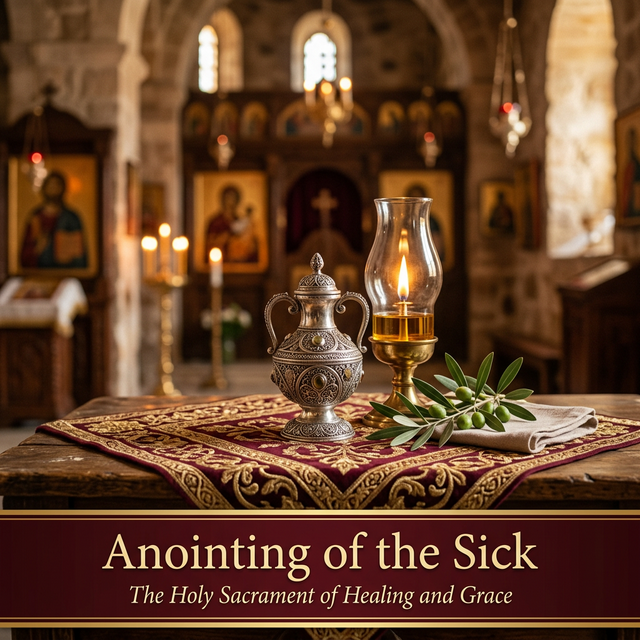
The Sacrament of the Anointing of the Sick, also known as Holy Unction (Rāzo d-Rohqo l-Chole), is one of the seven Holy Sacraments of the Syriac Orthodox Church. It is a sacred mystery through which the grace of the Holy Spirit is invoked for the healing of soul and body of those who are sick, suffering, or near death. This sacrament reveals the merciful and healing nature of our Lord Jesus Christ, who came to restore not only our souls but also our bodies.
Introduction to Holy Unction
Biblical Foundation
The practice of anointing the sick has its roots in the Holy Scriptures and the ministry of Jesus Christ. Our Lord Jesus Christ, during His earthly ministry, healed the sick and commanded His disciples to continue this healing work in His name. The Gospel of Mark records this important commission:
"They cast out many demons and anointed with oil many who were sick, and healed them." (Mark 6:13)
The Apostle James, in his epistle, provides the most explicit scriptural foundation for this sacrament in the Church's practice. Writing under the inspiration of the Holy Spirit, he clearly instructs the faithful:
"Is anyone among you sick? Let him call for the elders (priests) of the church, and let them pray over him, anointing him with oil in the name of the Lord. And the prayer of faith will save the sick, and the Lord will raise him up. And if he has committed sins, he will be forgiven." (James 5:14–15)
This passage from James forms the biblical foundation for the Anointing of the Sick as a means of divine healing and forgiveness of sins. It demonstrates that the practice is not merely a pious custom but a divinely ordained sacrament through which God's grace flows to the sick and suffering. The Church has maintained this practice throughout the centuries as a vital expression of Christ's healing ministry.
The Purpose of the Sacrament
The purpose of this holy sacrament is both spiritual and physical healing. It is not merely for those who are dying, though it is particularly appropriate for the dying, but for all who are suffering in body, mind, or spirit. Through prayer and the anointing with blessed oil, the Church intercedes for the sick person's healing, forgiveness, peace, and comfort.
The sacrament reminds us of a fundamental truth: suffering and sickness entered the world as a consequence of sin, but Christ, the Divine Physician (Asya Ilohaqo), came to restore the fallen nature of humanity. He did not merely teach about healing; He actively healed the sick, cast out demons, and commissioned His Church to continue this ministry. The healing power of this sacrament comes from God's infinite mercy and grace, not from the oil itself, though the oil serves as a visible sign of the invisible grace of the Holy Spirit.
This sacrament encompasses multiple dimensions of healing. It brings physical restoration when God wills it, spiritual renewal through the forgiveness of sins, mental peace and comfort to those tormented by fear or despair, and strength to bear suffering when physical healing is not granted. It is fundamentally an expression of God's tender compassion for His suffering children.
The Oil of Healing
The holy oil (Shemen Qaddisho) used in this sacrament is blessed by the priest during the service. Oil holds rich symbolic significance throughout the Holy Scriptures and has been associated with blessing, healing, and the presence of the Holy Spirit since ancient times. In the Old Testament, oil was used to anoint kings, priests, and prophets as a sign of God's favor and the coming of the Holy Spirit upon them.
Oil symbolizes mercy, life, restoration, and divine care. It recalls the parable of the Good Samaritan, in which the compassionate man bound up the wounds of the injured traveler, pouring oil and wine upon them (Luke 10:34). This pouring of oil upon wounds symbolizes both the healing and divine compassion that flows from God's heart toward the suffering.
In the Syriac Orthodox Church, the anointing oil is far more than a cosmetic substance or a mere symbol. It is a tangible expression of God's loving care, sanctified by the prayers of the Church and the invocation of the Holy Spirit. The oil becomes the vehicle through which grace flows to the sick person. The faithful understand that when the priest anoints them with the holy oil, it is Christ Himself, through His Church and by the power of the Holy Spirit, who touches and heals them. The oil is a reminder that the Lord Himself anoints His faithful with grace, healing, and restoration.
The Rite of the Anointing
The ceremony of the Anointing of the Sick is solemn, comforting, and deeply prayerful. It reflects the gravity of the sick person's condition while radiating the hope and mercy of Christ. The rite is usually performed by a priest, and when possible, in the presence of the family, the faithful, or the church community. The presence of witnesses affirms the sacramental nature of the action and allows the community to participate in interceding for the sick.
Opening Prayers
The priest begins the service with psalms and solemn prayers that invoke the mercy of God. These opening prayers prepare the atmosphere for the sacred act about to take place, calling upon the faithful to unite their hearts in prayer and intercession for the sick person. The priest acknowledges the power of God and the weakness and vulnerability of human nature in the face of illness.
Readings from Scripture
Selected passages from the Gospels and the Epistles are read during the service. These readings focus on Christ's power to heal and forgive, reminding the sick person and all present that healing comes from Christ. Passages such as the healing of the paralyzed man, the woman with the issue of blood, and other miracles of Jesus are often chosen to encourage faith and hope.
Blessing of the Oil
The priest prays over the oil, asking God to sanctify it for healing and forgiveness. Through this prayer of blessing, the oil is set apart from ordinary use and consecrated as a sacramental substance. The priest invokes the presence and power of the Holy Spirit upon the oil, that it may become an instrument of divine grace and healing.
The Anointing
The priest anoints the sick person's forehead, chest, and hands with the holy oil, making the sign of the Cross at each point. These locations are significant: the forehead represents the mind and thoughts, the chest represents the heart and will, and the hands represent the works and actions of the person. The priest's words at this solemn moment express the prayer of the Church:
"May this holy anointing and the mercy of God heal you from all sickness of soul and body."
Through these words and the outward sign of anointing, the sick person receives the assurance that God's healing mercy is being poured upon them.
Prayer for Forgiveness and Healing
The priest lays his hands upon the sick person and prays that the Holy Spirit may restore their health, forgive their sins, and strengthen their faith. This prayer acknowledges that the sick person may have burdens of sin that add to their suffering, and through this sacrament, they receive absolution and peace. The priest also prays for spiritual strengthening, that the sick person may maintain faith and trust in God through their trial.
Final Blessing
The service concludes with prayers for peace, comfort, and the hope of resurrection. The priest blesses the sick person and often the entire family, asking God to grant them courage, trust, and the assurance of His presence.
Connection with Other Sacraments
If the person is near death, the sacrament of Holy Unction may be followed by Holy Confession for the forgiveness of any remaining sins, and the Holy Eucharist (Viaticum) — the final communion given to a departing soul. These three sacraments together provide complete spiritual preparation for one's passage into eternity.
The Spiritual Meaning
The Anointing of the Sick is not only for bodily healing but also, and perhaps primarily, for the healing of the soul. It is a sacrament that transforms the meaning and purpose of suffering in the believer's life. The sick person is reminded that their sickness is a participation in the suffering of Christ, and that through suffering willingly borne, one can grow in faith, patience, holiness, and love.
In the Orthodox Christian understanding, suffering is not meaningless or divorced from God's purpose. Rather, suffering can be transformed through faith into a powerful spiritual gift. When a believer offers their suffering to Christ and unites their pain with His redemptive suffering on the Cross, their suffering becomes redemptive, purifying, and spiritually productive. The Anointing of the Sick imparts grace to the believer to accept their suffering in this spirit and to grow spiritually through it.
This sacrament also offers the forgiveness of sins, as the Apostle James explicitly stated, and prepares the soul to face death with peace and confidence in God's mercy. For those whose death is approaching, the sacrament provides spiritual completion and assurance of Christ's presence in their final hours. For those who will recover, the anointing strengthens them to live out the remainder of their lives with renewed faith and spiritual resolve.
It is fundamentally a sacrament of hope and restoration, not despair. Even when physical healing does not occur, spiritual renewal and divine consolation are always granted. The grace of the Holy Spirit works in ways that transcend our limited understanding, and God's mercy is always sufficient for every need.
Connection with Other Sacraments
The Anointing of the Sick is closely connected to three other healing sacraments: Confession (Penance and Reconciliation), the Eucharist (Holy Communion), and in certain cases, Priesthood. These sacraments work together to form the complete healing and restorative ministry of the Church.
Holy Confession (Penance and Reconciliation)
Through Confession, the soul is cleansed from sin and restored to communion with God. The penitent receives absolution from the priest and assurance that their sins are forgiven. This sacrament removes the spiritual obstacles that may be preventing healing and prepares the heart to receive the grace of the Anointing.
Holy Unction (Anointing of the Sick)
Through Anointing, the body and soul are strengthened with the healing grace of the Holy Spirit. Comfort is given to the afflicted, courage to the fearful, and peace to the troubled. The sacrament imparts both healing power and spiritual grace.
Holy Eucharist
Through the Eucharist, the believer is united with Christ, the Giver of Life. The body and blood of Christ, received in Holy Communion, are the source of healing, restoration, and eternal life. The Eucharist nourishes the spiritual life and provides sustenance for the soul, whether in illness or in health.
Together, these sacraments form the healing ministry of the Church, reflecting Christ's compassion toward the sick and suffering. They work in harmony to address the whole person—body, soul, and spirit—and to bring about wholeness and restoration in Christ.
The Role of Faith
The sacrament is most effective when received with faith, repentance, and humility. The Church teaches that faith is not a work that earns God's favor, but rather the condition through which God's grace enters the human heart. When a sick person comes to receive the Anointing with genuine faith in Christ's power to heal, with sincere repentance for their sins, and with humble submission to God's will, they open their heart to receive the fullness of grace that the sacrament conveys.
However, the Church also recognizes an important truth: God's will is supreme, and His purposes are not always what we expect or desire. Sometimes Christ heals the body; other times He heals the soul or grants spiritual strength to bear the suffering. The faithful must trust that in all circumstances, God's mercy is at work for their salvation and for their ultimate good. God sees what we cannot see and knows what is truly necessary for our spiritual growth and redemption.
This is not fatalism or resignation, but rather a deep trust in God's wisdom and love. The believer can faithfully seek healing, ask for prayers, and receive the sacraments while also maintaining the conviction that God's wisdom and mercy will determine the outcome. In this balance—between confident prayer for healing and humble submission to God's will—the faithful find peace and spiritual maturity.
Symbolism of the Oil and the Cross
The two central symbols of this sacrament are the oil and the sign of the Cross, each carrying profound spiritual meaning.
The Oil
The oil signifies the soothing, healing grace of the Holy Spirit. Just as oil soothes and restores dry or damaged skin, the grace of the Holy Spirit soothes the wounded soul, bringing comfort to the distressed and restoration to the broken. The oil also symbolizes the anointing presence of God, reminiscent of how kings and priests were anointed with oil as a sign that God's favor and power rested upon them. When the sick are anointed with the holy oil, they are marked as belonging to God and as recipients of His sovereign care and healing power.
The Sign of the Cross
The sign of the Cross, traced upon the sick person's body during the anointing, reminds them of the redemptive suffering of Christ and the power of His cross to transform all human suffering. The Cross is not merely a symbol of Christ's death but of His victory over death and evil. By uniting their pain with the Cross and with Christ's suffering, the faithful find meaning in their suffering and hope in the Resurrection.
Together, the oil and the Cross represent God's twofold ministry to the suffering: His tender compassion (symbolized by the soothing oil) and His redemptive power (symbolized by the Cross). Through these two symbols, the sacrament communicates that the sick person is not alone in their suffering but is held by the power and mercy of Christ.
Conclusion
The Sacrament of the Anointing of the Sick is a beautiful and comforting expression of the Syriac Orthodox Church's faith in the healing and saving power of Christ. It brings peace to the afflicted, forgiveness to the penitent, and hope to the dying. This sacrament has ministered to countless generations of believers, and it continues to be a source of spiritual consolation and divine healing.
Through this holy mystery, the faithful are reminded that Christ, the Great Physician (Asya Ilohaqo), continues His ministry of healing through His Church. He has not abandoned the sick and suffering but remains present to them through the sacraments and the prayers of His faithful people. The Anointing of the Sick is a tangible expression of that presence, a visible sign of Christ's mercy, and a channel through which His healing grace flows to all who receive it with faith and repentance.
Prayer for the Sick
O Lord Jesus Christ, Great Physician of souls and bodies, who came into the world not to be served but to serve, and who went about healing all manner of diseases and infirmities, we humbly lift up to You those who are sick and suffering. Pour forth upon them the grace of Your healing Spirit. Grant them comfort in their pain, peace in their distress, and strength in their weakness. Forgive them their sins and cleanse their hearts. If it be according to Your will, restore them to health that they may praise Your holy name and glorify Your power. But whether You grant them healing in this life or prepare them for life eternal, give them the confidence that Your mercies are new every morning and that Your love will never abandon them. Receive their prayers and the intercessions of Your Church, and grant them the assurance of Your presence in their trial. Through the power of Your Holy Cross and through the intercession of Your saints, heal them according to Your infinite mercy. Amen.
"The oil of mercy is the sign of the grace of Christ; it heals the wounds of the soul and restores the weary to life." — St. Ephrem the Syrian